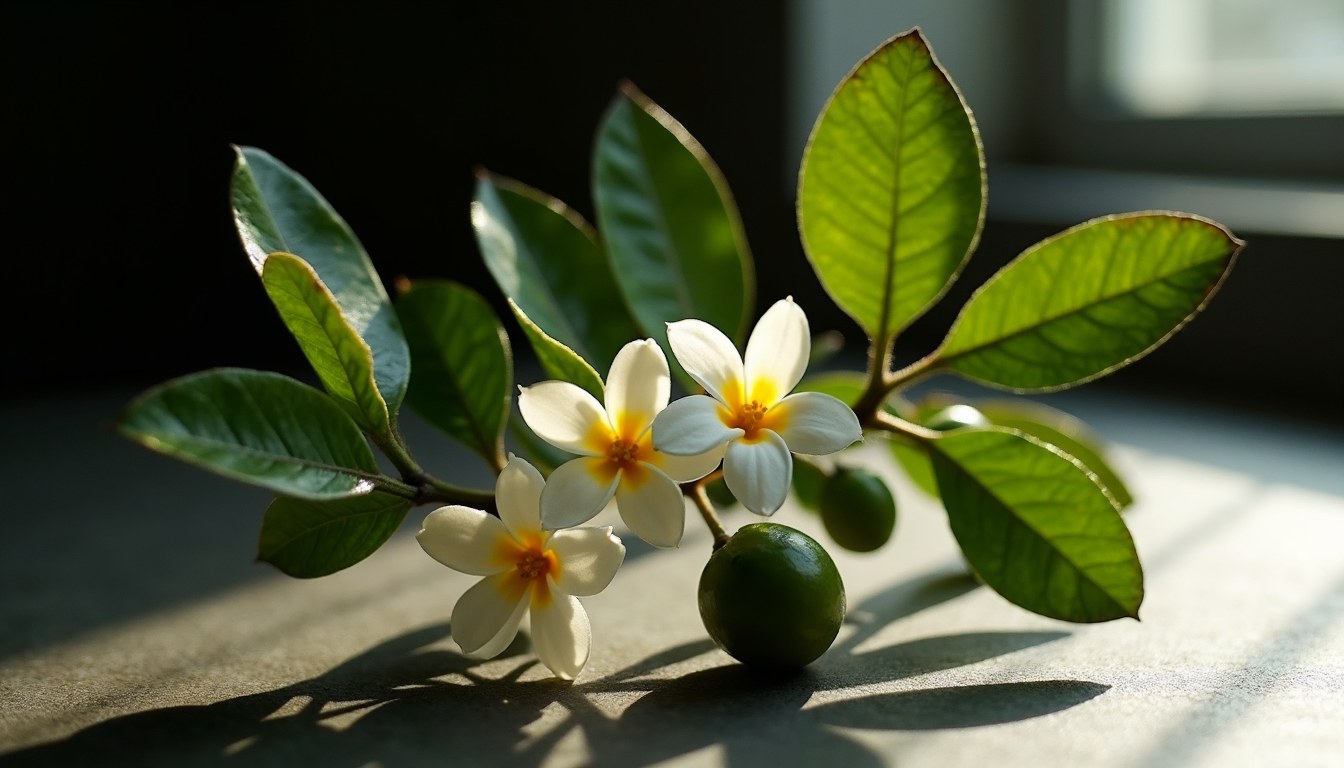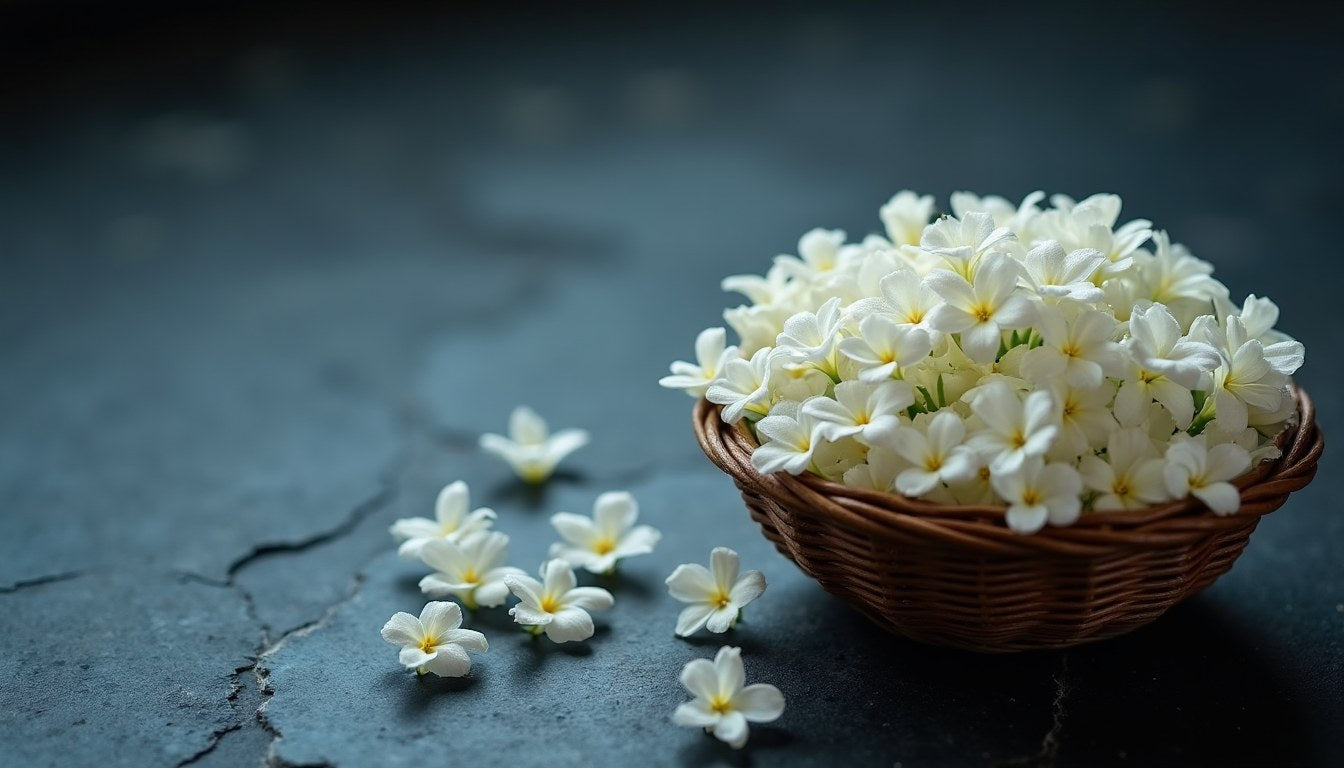









Jasmine smells rich, sweet, and unmistakably alive: a warm white floral with a fruity, almost apricot top, a green tea sharpness underneath, and a heavy animalic depth from indole, a molecule that is frankly unpleasant on its own. In dilution that dark facet reads as warmth and body rather than anything off-putting.
Most people have never smelled it. The jasmine of soap aisles and laundry products is a stripped skeleton: the sweet fruity ester kept, the indole taken out, and the indole is the part that made it read as a living flower rather than a sugary approximation of one. Jasmine rice has no chemical relationship to the blossom at all, and several of the most widely grown garden plants sold as jasmine are not Jasminum in the first place. Almost everything interesting about the real flower comes from that paradox: part of what jasmine smells like is genuinely unpleasant in isolation, and taking it out does not give you a cleaner jasmine, only a flat one.
The short version
- Smells like: apricot and pear jam up front, a green tea edge beneath it, then a waxy honeyed flower with animalic warmth and a long, faintly leathery balsamic tail.
- The surprise: sambac can test above thirteen percent indole against grandiflorum's one to three, yet grandiflorum smells the more indolic of the two, because sambac's green and fruity molecules mask it.
- The chemistry: benzyl acetate carries the fruit at roughly 15 to 30 percent of grandiflorum's volatile fraction, indole supplies the living warmth, and the jasmonates persist long after both have faded.
- Where it comes from: two species, Jasminum grandiflorum and Jasminum sambac, hand picked in the dark because output peaks near midnight, at roughly 285 to 400 kilograms of blossom per kilogram of concrete.
- In a room: fruit arrives within two minutes, the flower assembles between five and fifteen, and the heavy fraction lingers for hours, which favors rooms of roughly 400 to 1,200 square feet that people move through.
- Not an essential oil: the flower gives up almost nothing to steam and its jasmonates degrade under heat, so the natural material is an absolute pulled out cold with solvent.
Jasmine at a glance
Jasmine belongs to the white floral group, alongside tuberose, gardenia, orange blossom, and ylang ylang. These are the heavy, waxy, night-scented blossoms, and they share a chemical family resemblance the lighter florals (rose, violet, lily of the valley) do not have. For the wider map of how these categories sit next to one another, our guide to fragrance families lays out the structure.
In the classic three-tier model of a fragrance, jasmine is a heart note. It does not announce itself in the first ten seconds the way a citrus peel does, and it does not sit under everything for twelve hours the way a heavy musk does. It arrives once the brightest material has burned off, holds the center of the composition, and hands off to the base. That middle position matters enormously in a diffuser.
Two species supply nearly all of the world's genuine jasmine material, and they do not smell the same. Jasminum grandiflorum is the one most people mean in a perfumery context, and it is the flower of the Mediterranean extraction industry. Jasminum sambac is the flower of jasmine tea and South Asian garlands. Origin then matters almost as much as species, because grandiflorum grown in three different places gives three recognizably different materials.
| Species or origin | Where it is grown | Character |
|---|---|---|
| Jasminum grandiflorum | Mediterranean, Egypt, southern India | Full, fruity, honeyed, soft leather |
| Jasminum sambac | India, Southeast Asia, southern China | Sharper, green, tea leaf, apple skin |
| Grasse grandiflorum | Alpes-Maritimes, France | Green, transparent, luminous top |
| Egyptian grandiflorum | Nile delta, Gharbiya governorate | Sweet, tenacious, honeyed or tea-like |
| Indian grandiflorum | Southern India | Densest of the three, deep balsamic |
The last three rows are all grandiflorum, listed separately because origin does something to this flower that it does not do to most. What that something is, and how much of it survives the journey from field to bottle, is worked through further down.
- Family: white floral, within the broader floral group
- Position in the pyramid: heart note, moderate volatility
- Botanical sources: Jasminum grandiflorum and Jasminum sambac, family Oleaceae (the same family as olive and lilac)
- Signature molecules: benzyl acetate, indole, linalool, cis-jasmone, methyl jasmonate, benzyl benzoate
- How it is captured: solvent extraction to a concrete and then an absolute, never steam distillation
- Character words: sweet, fruity, waxy, green, heady, faintly animalic
- Pairs with: citrus blossom, sandalwood, musk, tuberose, bergamot, tea
The scent, decomposed
The first impression
Smell a good jasmine material and the first thing that reaches you is not floral in the abstract sense. It is fruit: a jammy, slightly overripe sweetness often described as apricot, sometimes as pear or banana peel depending on species and batch. That is largely benzyl acetate, an ester that is both the most abundant single component of jasmine absolute and one of the most recognizable sweet-fruity smells in perfumery.
Riding just under the fruit is a green streak: fresh, slightly bruised, closer to a crushed leaf than to cut grass. In sambac this facet is far more prominent and reads as tea, which is no coincidence, since sambac is the flower used to scent green tea in Fujian. In grandiflorum it shows up as an edge on the sweetness rather than a note of its own.
The heart and the drydown
Thirty seconds to two minutes into a blotter, the flower opens. The fruit recedes and something larger comes forward: a dense, waxy, petal-like body with real weight to it. There is a honeyed quality, a warmth closer to beeswax than to sugar, and underneath it all a low animalic hum that is difficult to name if you have not been told what it is.
That hum is indole, and it is why jasmine feels three-dimensional. It does not smell like a separate note stacked on the flower. It smells like the flower has a body and a temperature. Perfumers call this indolic, and once you can hear it you cannot unhear it. The same quality runs through jasmine, orange blossom, tuberose, and gardenia, and it is entirely absent from the jasmine accord in a fabric softener.
The dry stages are slower. Jasmine absolute carries a substantial fraction of barely volatile material: benzyl benzoate, almost odorless on its own and faintly balsamic in quantity, phytol (the heavy alcohol that forms the side chain of chlorophyll) and its isomer isophytol, both essentially odorless alone, and waxes. They anchor everything above them and give jasmine an unusually long, faintly balsamic tail for a floral. Hours later, on a blotter or a cushion, what remains is a warm waxy trace with a hint of tea and something almost leathery.
The facet vocabulary
These are the facets professionals reach for. Most good jasmine materials carry several at once, and the ratio between them is what makes one species or one harvest read differently from another.
- Fruity: apricot, ripe pear, occasionally banana peel, from the esters
- Green: leafy, tea-like, faintly bitter, strongest in sambac
- Indolic or animalic: warm, biological, faintly living, with a mothball edge at strength
- Waxy: the texture of a thick petal, close to beeswax
- Honeyed: a rounded sweetness distinct from the fruit
- Spiced: a small clove-like lift from eugenol, usually a couple of percent of the absolute
- Leathery: a dry, tanned quality in the late drydown of grandiflorum
What jasmine does not smell like
It does not smell like the "jasmine" in household products. That accord is the flower with its body removed: benzyl acetate for the fruity sweetness, a modern jasmonate for lift, and the indole cut to nothing. The result is pleasant, cheap, stable, and completely bloodless. It is to real jasmine roughly what a banana candy is to a banana, and if you have only met that version the real thing can be startling.
It does not smell like jasmine rice. That aroma comes from 2-acetyl-1-pyrroline, a nitrogen-containing molecule that smells of popcorn and warm bread and also gives pandan leaf its character. It has no relationship to the flower. The rice was named for the color of its grain.
It does not smell like most plants called jasmine. Star jasmine (Trachelospermum jasminoides) is not a Jasminum at all and smells sweeter, thinner, more nakedly floral. Night-blooming jasmine (Cestrum nocturnum) is a nightshade relative with a piercing, green-honeyed scent that carries much further on a summer night. Carolina jasmine (Gelsemium sempervirens) is unrelated again. Gardeners and perfumers routinely use one word for four different organisms.
It is not the same as tuberose. The two get grouped together and they do share indole, but tuberose has a cool, almost mentholated sharpness and a creamier body. Jasmine is warmer, fruitier, less confrontational. Orange blossom is a third relative again: lighter, more citrus-tinged, the indole sitting behind a bright green freshness.
The chemistry behind the note
Jasmine absolute is a genuinely complex mixture. Analytical work has identified well over a hundred volatile components, and the profile shifts with species, region, season, and time of picking. But a handful of molecules do most of the perceptual work.
The chemical signature
These are the molecules that carry the impression, in the flower and in the reconstructions built to imitate it, ordered roughly from the quickest to leave a surface to the slowest.
| Molecule | Formula | Molecular weight | Boiling point |
|---|---|---|---|
| Linalool | C10H18O | 154.3 | 198 C |
| Benzyl acetate | C9H10O2 | 150.2 | 212 C |
| cis-Jasmone | C11H16O | 164.2 | 146 C at 27 mmHg |
| Indole | C8H7N | 117.2 | 253 C |
| Methyl jasmonate | C13H20O3 | 224.3 | 89 C at 0.1 mmHg |
| Methyl dihydrojasmonate | C13H22O3 | 226.3 | 308 C |
| Benzyl benzoate | C14H12O2 | 212.2 | 323 C |
Boiling points are in degrees Celsius at ordinary atmospheric pressure unless a reduced pressure is given alongside them. Cis-jasmone and methyl jasmonate are both distilled under vacuum, and the atmospheric figures quoted for them are extrapolations rather than measurements, with the published values for cis-jasmone spread across more than fifteen degrees, so the measured vacuum figures are given instead. Methyl jasmonate coming over below 90 degrees at a tenth of a millimeter of mercury tells you it is heavy, but it does not sit on the same scale as the rest of that column. Indole is the outlier in the other direction: it is the smallest molecule listed and one of the slowest to leave a surface, boiling about forty degrees above benzyl acetate, which matters a great deal once the note is put into a room.
Benzyl acetate: the fruity opening
Benzyl acetate is an ester, meaning an alcohol and an acid joined together, the general class of molecule responsible for most fruity smells in nature. It is one of the more volatile things in the mixture, which is why it leads the impression.
Published analyses of Jasminum grandiflorum absolute commonly report benzyl acetate between roughly 15 and 30 percent of the volatile fraction, varying by origin and harvest. One analysis of Indian grandiflorum absolute put it near 24 percent, alongside benzyl benzoate at about 21 percent, phytol at about 11 percent, and linalool at roughly 8 percent. In sambac it usually sits lower, often in the low-to-mid teens, which is one reason sambac reads less fruity. On its own benzyl acetate smells sweet and slightly sharp. It is not a beautiful material in isolation. It is a workhorse.
Indole: the molecule that makes it alive
Indole is a small, flat, two-ring molecule containing nitrogen, and at room temperature it is not a liquid at all: it is a white crystalline solid that melts near 52 degrees Celsius. It was first obtained in 1866 by the German chemist Adolf von Baeyer, who produced it by reducing oxindole with zinc dust while working out the structure of the indigo dye, and he proposed the name indole a few years later. In 1899 the chemist Albert Hesse demonstrated indole's presence in both jasmine and orange blossom extracts.
Here is the paradox. Smell pure indole, or indole above roughly one percent on a blotter, and it is not floral in the slightest. It is frankly fecal, with a hard mothball edge underneath. The reason is chemical rather than poetic: indole is what bacteria produce when they break down the amino acid tryptophan, a reaction that runs wherever organic matter is being taken apart, so the molecule is common to blossoms and to decomposition alike. Your nose is not being fooled. It is correctly identifying a molecule with a very wide biological distribution.
Now dilute it. Somewhere around a few hundred parts per million and below, indole changes character completely. The fecal quality disappears and what remains is a dense, waxy, luminous white-floral effect no other single material produces. It stops smelling like a thing and starts smelling like a dimension.
Why does a molecule change identity with concentration? Smell is a pattern of activation across several hundred receptor types in your nose, and that pattern shifts with dose: at high concentration a molecule saturates its highest-affinity receptors and begins recruiting others. Indole is the most dramatic everyday example, though several sulfur compounds behave the same way, which is why blackcurrant and grapefruit materials can smell like cat urine when overdosed.
In grandiflorum absolute, indole is commonly reported at around one to three percent. In sambac, published analyses often report far more, some above thirteen percent. That is a genuine wrinkle, because perfumers generally describe grandiflorum as the richer, more indolic-smelling of the two. The explanation is that a note is never a sum of its percentages. Sambac's high indole is masked and reframed by its green and fruity companions: alpha-farnesene (a fresh apple-skin brightness, present at a comparable share), cis-3-hexenyl benzoate (a heavy green leaf note), and methyl anthranilate (grape-like and faintly powdery, also found in orange blossom). Grandiflorum, with less green to distract you, wears its smaller amount of indole more openly.
Jasmone, methyl jasmonate, and the 1960s change
Hesse's 1899 work on jasmine blossom oil also turned up a ketone, which he named jasmone, present at around three percent. The naturally occurring form, cis-jasmone, smells green, herbal, and slightly celery-like at strength, floral and warm in dilution. It gives jasmine its vegetal spine and is still used as a green modifier in jasmine reconstructions.
The bigger discovery came half a century later. In 1957 the chemist Edouard Demole, working in Geneva on Mediterranean grandiflorum concrete for a doctorate he was completing in Paris, identified methyl jasmonate as the heart of a jasmine fraction that had resisted characterization. On a blotter it reads floral and herbaceous, sweet, and persistent long after the fruity esters have gone. It is also more than a smell: it is a plant signalling compound, part of the hormonal system plants use to coordinate their response to wounding, which means the molecule that makes jasmine smell like jasmine is also part of how the plant talks to itself.
Demole then synthesized a related compound, methyl dihydrojasmonate, the saturated version of the same skeleton and easier to make. It was patented around 1960, produced in a first batch of about fifty kilograms in 1961, and described in the scientific literature in 1962. It has been manufactured at increasing scale ever since, and it is now one of the highest-volume aroma chemicals in the perfumer's palette.
Methyl dihydrojasmonate changed the entire industry in a way that is almost invisible on a blotter. Alone it is faint: a soft, transparent, slightly citrus-floral haze with very low odor intensity. In a formula it behaves differently. Because it is a heavy molecule but not a thick-smelling one, it adds volume and radiance without adding weight, making a floral bigger without making it denser. Normal use runs between two and fifteen percent of the total, and floral compositions can be pushed to thirty-five percent and above, where it functions less like an ingredient than like a lens. Before it existed, making a floral louder generally meant making it heavier.
Linalool and the supporting cast
Linalool is a terpene alcohol and one of the most widely distributed scent molecules in the plant kingdom: lavender, coriander seed, bergamot, rosewood. In jasmine it runs from a few percent of the volatile fraction up to the eight percent the Indian analysis above returned, and supplies a fresh, slightly woody lift that keeps the heavier material from collapsing inward. Around these principals sit benzyl alcohol, benzyl benzoate, eugenol, and dozens of trace components that individually register as noise.
Why jasmine cannot be steam distilled
Most aromatic plants give up their oil to steam. You pack the still, push steam through, condense the vapor, and separate oil from water. Lavender, peppermint, eucalyptus, and clove all work this way, and steam-distilled essential oil of those plants is the traditional raw material.
Jasmine does not cooperate. The yield is negligible, because the flower holds a tiny quantity of volatile material and does not store it in accessible oil glands the way a citrus peel does. More importantly, the molecules that matter are fragile: the jasmonates and several delicate esters degrade under prolonged heat in the presence of hot water. What comes out of a still is not a weaker jasmine. It is a different and worse smell.
So jasmine has always been captured cold. Historically that meant enfleurage. Fresh blossoms were laid onto a thin layer of purified odorless fat spread across a glass plate held in a wooden frame called a chassis, and the fat absorbed the volatiles the flowers kept emitting after picking. Spent flowers were replaced with fresh ones, sometimes twenty-five to thirty-six times over several weeks, until the fat was saturated. That scented fat, a pomade, was washed with alcohol to yield an absolute. It worked beautifully and was ruinously slow.
Modern practice uses volatile solvent extraction. Flowers are washed with a hydrocarbon solvent, usually hexane, which dissolves the aromatic compounds along with waxes and pigments. Evaporating the solvent leaves a waxy semi-solid called a concrete, which is stirred with ethanol, chilled so the waxes drop out, filtered, and stripped of ethanol under vacuum. What remains is the absolute: a deep orange-brown, viscous, intensely concentrated liquid. Enfleurage was largely abandoned in the 1930s once solvent extraction became reliable at industrial scale.
How jasmine behaves in a cold-air diffuser
Everything to this point has described jasmine as a perfumery material sitting in a bottle: what it smells like, which molecules produce that, and how they are pulled out of the flower. Putting that note into the air of a room is a different physical problem, and jasmine is where the difference matters most.
Volatility and bloom timing
Cold-air diffusion puts the whole blend into the room at once and unheated, which means the order in which you meet jasmine is set by the note itself rather than by the machine. That order is unusually spread out, because jasmine's components sit across a wide range of molecular weight and boiling point, as the signature table in the chemistry section shows. Linalool is the quickest of the principals to leave a droplet and benzyl acetate follows close behind. Cis-jasmone and indole are slower again and sit close to one another, and indole is the surprise of the group: it is the smallest molecule of the principals by weight, yet it is among the slowest to leave a surface, because it is a crystalline solid at room temperature and boils well above both linalool and benzyl acetate. The jasmonates are slower still, and the fixative fraction, benzyl benzoate and the phytols, barely moves on a room's timescale.
That spread can be laid out as a timeline. What follows is reasoned from the relative volatility and boiling points of jasmine's own constituents rather than measured in a room, so the bands are approximate, and ventilation, temperature, furnishing, and room size all move them.
- 0 to 2 minutes: the light material arrives first. Linalool and benzyl acetate lead, so the room reads bright, sweet, and fruity, closer to apricot and pear than to a flower, along with whatever citrus or green material rides on top of them. The impression is thin at this stage, and slightly generic.
- 5 to 15 minutes: the top clears and the flower assembles. Cis-jasmone brings the green spine, and indole accumulates slowly enough that its warmth arrives late, which is the moment the room stops smelling of sweet fruit and starts smelling of an open flower, warm and faintly animalic. This is jasmine at full presence and it is the window the blend is built around.
- 1 to 2 hours and beyond: the fast material is long gone and the heavy fraction is doing the work. Benzyl benzoate, the jasmonates, and the waxes have settled onto upholstery, curtains, and rugs, and they keep releasing after the machine has stopped. What is left is warm, waxy, and faintly balsamic, with a trace of tea, quieter than the bloom but recognizably the same flower.
The practical consequence is that jasmine blooms in the middle of a diffusion cycle rather than at the start, and then declines far more slowly than it built. Judge a jasmine blend in the first two minutes and you have not met it yet.
This is why the interval setting matters more than the intensity setting with this note. Because jasmine accumulates rather than arriving, a long continuous run does not make a room smell more like jasmine. It makes the room smell like too much jasmine, twenty minutes after you stopped noticing. Short bursts with generous gaps let the note reach its bloom and decay before the next one.
Rooms, square footage, and the overdose problem
Jasmine is powerful and it has an unusually sharp failure mode. The dilution paradox from the chemistry is the whole of it: indole is beautiful below a certain concentration and unmistakably biological above it. A small closed room is precisely where airborne concentration climbs, and it climbs faster than most people expect because nothing carries the material away. A blend that is gorgeous in a stairwell can turn heavy and slightly sour in a closed 100 square foot bathroom at the same settings.
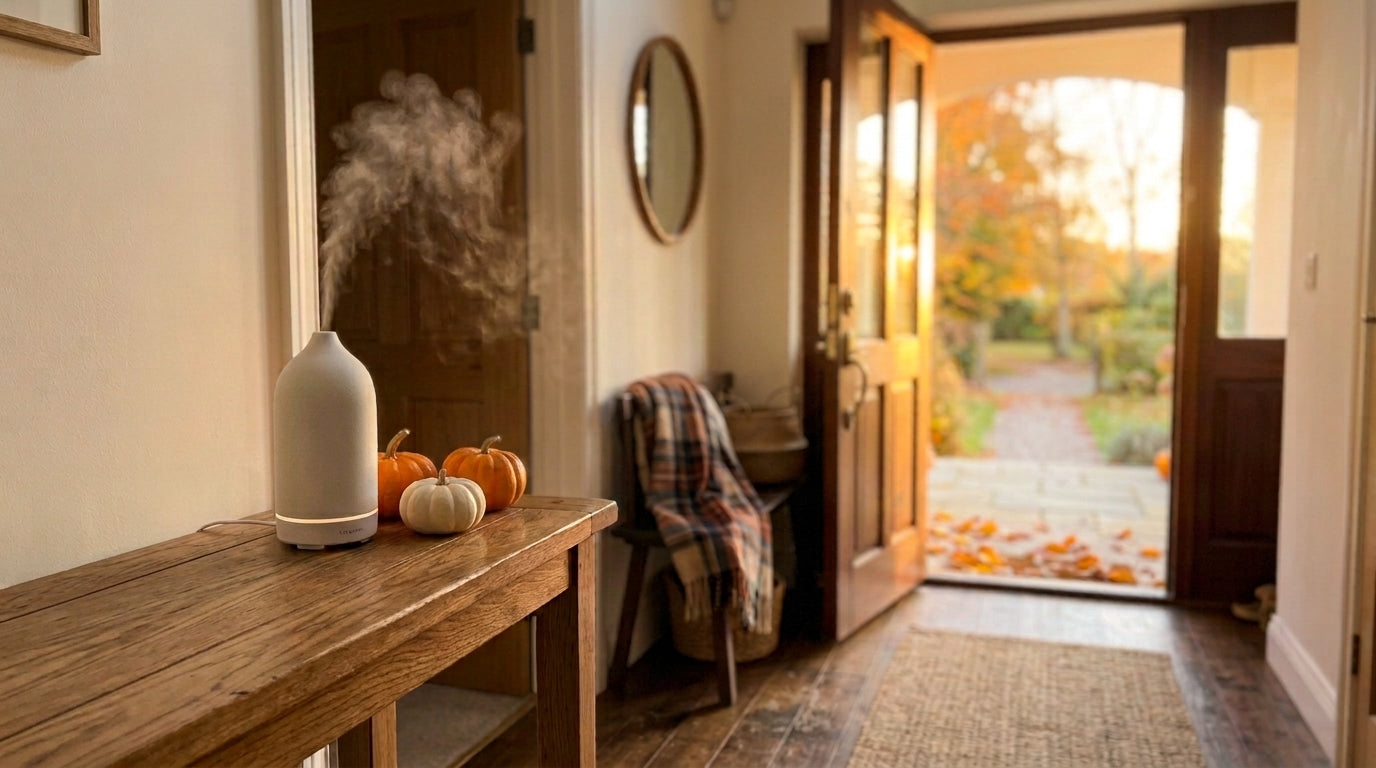
The rooms where jasmine performs most convincingly have volume and movement: entryways, foyers, stairwells, open-plan living and dining spaces, connecting hallways. Anything from roughly 400 to 1,200 square feet with reasonable ceiling height lets the note expand and dilute into its flattering range. An entryway is close to ideal, because people move through it rather than sitting in it, so they meet the note at its bloom and leave before it accumulates.
Small bedrooms, home offices, powder rooms, and cars are the difficult cases. Jasmine can work in them, but at a fraction of the duty cycle you would use elsewhere: start with the shortest burst and longest interval your machine offers, and adjust upward only if you genuinely cannot smell it after ten minutes. The failure mode is almost never too little.
Why cold air suits an indolic floral
Heat sorts molecules. A heated diffuser drives off whatever is most volatile first, continuously, so the material left behind steadily loses its light fraction while the heavy fraction concentrates. Sustained heat also degrades the fragile components, and the jasmonates and several jasmine esters object to being held at elevated temperature for hours. What you smell is a heat-sorted, partly cooked subset of the blend: sweeter and simpler at first, then progressively flatter.
Cold air does not sort. Evaporation still happens in order of volatility, but from droplets suspended at room temperature rather than from a heated reservoir, so nothing waiting in the bottle is cooked between one cycle and the next. For a note whose whole character depends on the ratio between a fast fruity ester and a slow indolic body, that is the difference between hearing the chord and hearing the top note of the chord.
The upshot is that jasmine's indolic depth survives cold-air diffusion much better than heated diffusion. If you have only met diffused jasmine through a warmer and found it thin, sweet, or oddly cheap-smelling, the note was not the problem. We have written separately about living with jasmine diffuser oil at home, including how the note settles across a week of daily runs.
Jasmine in a candle, a reed diffuser, and cold air
In a candle, the melt pool typically sits between 50 and 70 degrees Celsius, and the air above the flame is far hotter. Hot throw favors materials volatile enough to leave the wax and stable enough to survive the temperature, so delicate indolic naturals lose their edges. Candle jasmine reads sweeter, rounder, less dimensional.
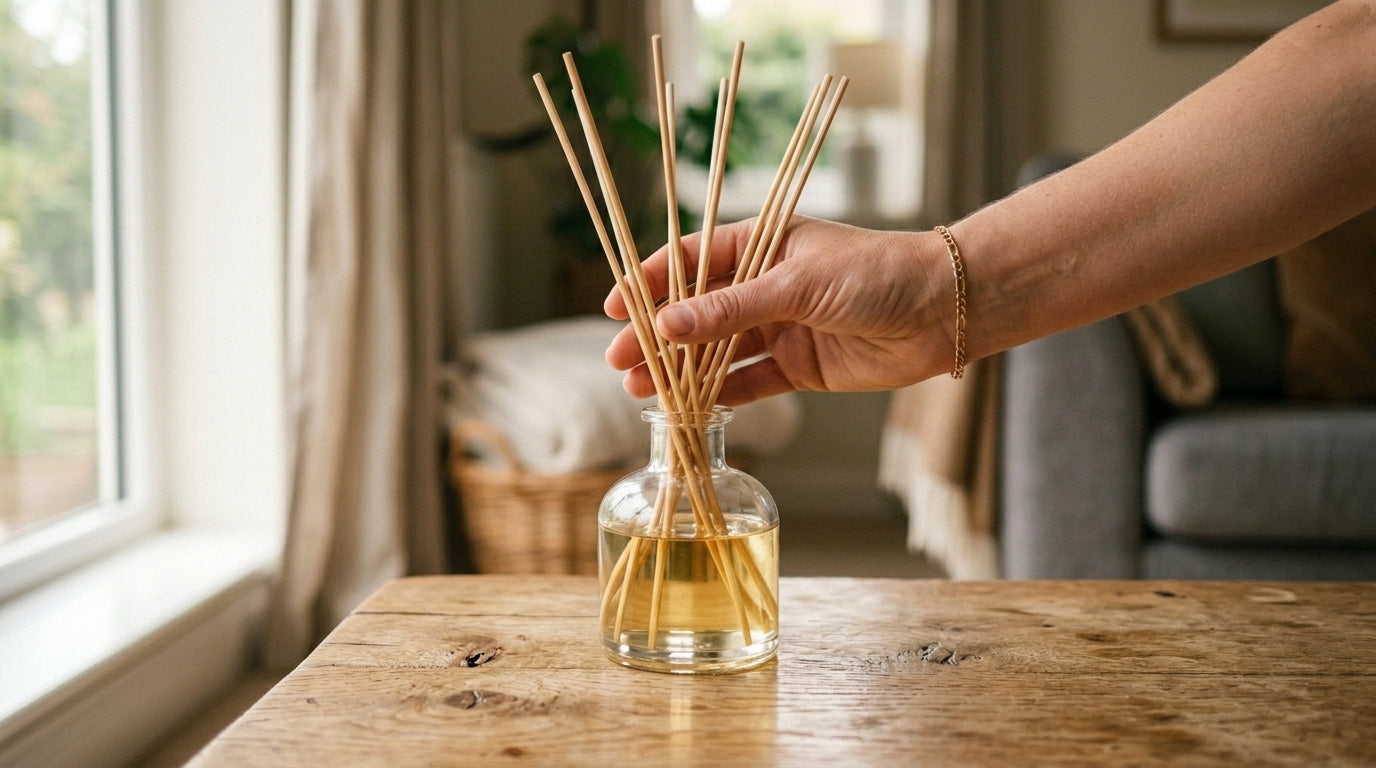
In a reed diffuser, nothing is atomized at all. The blend climbs the reeds by capillary action and evaporates from whatever surface area the reeds expose, so the room only ever receives what is light enough to leave a static wick unaided. The fruity esters go first and go quickly, the heavy fixative fraction concentrates in the bottle instead of reaching the air, and a jasmine that opened bright drifts green and waxy over the following weeks. Reeds also cannot be switched off, so there is no interval to work with and no way to let the note decay before the next release.
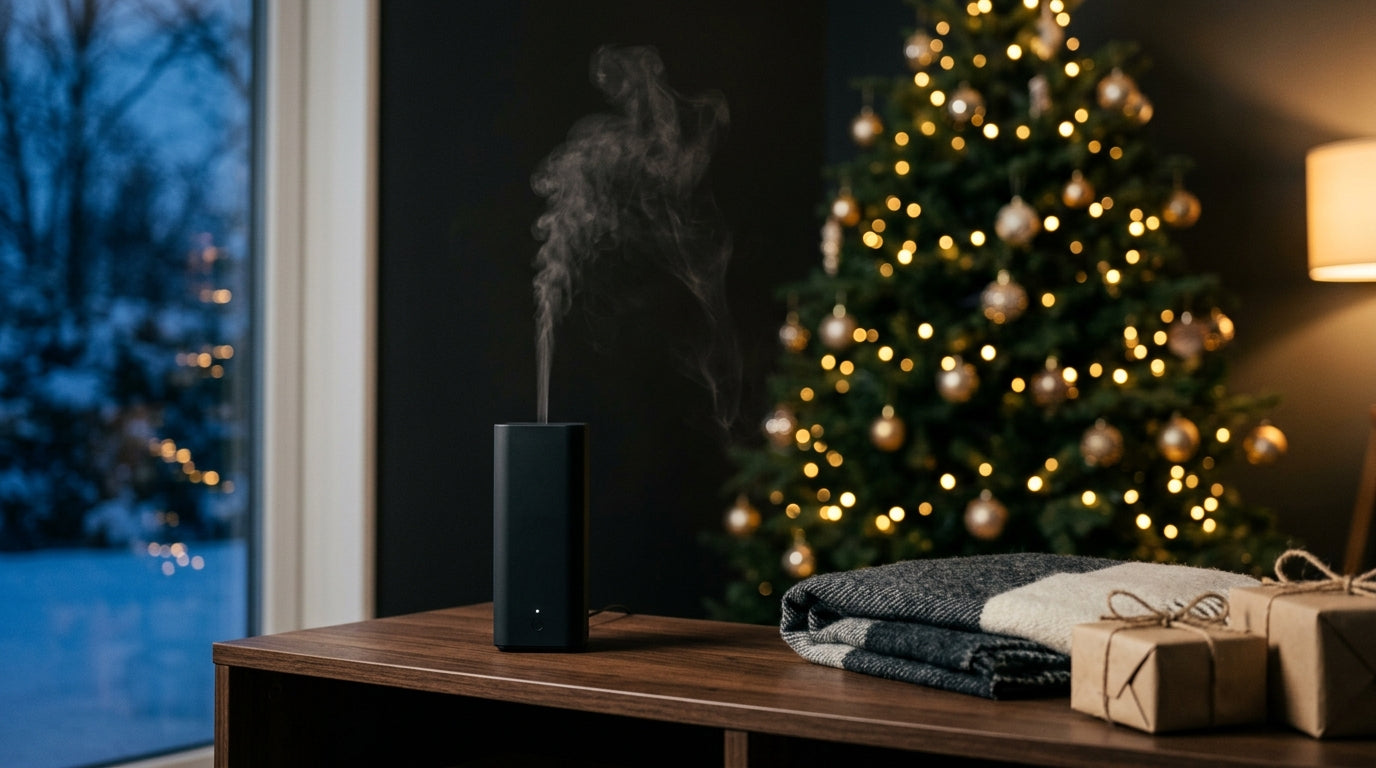
In cold-air diffusion, jasmine stays more transparent and more clearly fruity-floral, because the droplets disperse into a large volume of air and the concentration reaching you stays low. You get the flower's brightness and depth without the density. It is jasmine as an atmosphere rather than as an object sitting in one corner, which is why an entryway treated this way reads as an evening-feeling space rather than as a bottle standing open on a table.
Layering
Jasmine layers generously as long as you respect its weight. Put something bright above it: bergamot, neroli, or a green tea accord gives the first thirty seconds a lift jasmine does not supply on its own. Put something soft beneath it: sandalwood, a warm musk, or vetiver extends the tail and keeps the drydown from reading purely waxy. Bright over floral over soft base is the classic structure, and it is classic because it works.
What does not work is stacking two heavy white florals in the same air. Jasmine plus tuberose, or jasmine plus gardenia, in one enclosed space is the most common layering mistake: both are indolic, both accumulate, and together they saturate a room quickly. If you want both, put them in different zones with real distance between them.
The equipment is the only modern part of any of that. Judging how much jasmine a space can carry, and when in the evening it should arrive, is a domestic version of a problem the flower has been setting for people for a very long time: in garden courtyards and temple offerings, in tea houses, and eventually in a hill town above the French coast.
The history: from the Himalayan foothills to Grasse
Origins and daily ritual in South Asia
The genus Jasminum contains roughly two hundred species across warm regions of Asia, Africa, and Oceania, and the two that matter commercially both trace to South and Southwest Asia. Botanical databases give the native range of Jasminum sambac as roughly Bhutan to India, centered on the eastern Himalayan foothills. Jasminum grandiflorum is harder to pin down after centuries of cultivation; reference sources describe wild populations from eastern Africa and the Arabian Peninsula through Pakistan, India, and Nepal into south-central China.
In South Asia jasmine was never primarily a perfume material. It was, and remains, a daily object. Fresh sambac blossoms are strung into garlands worn in the hair, offered at temples, exchanged at weddings, and sold by weight at flower markets before dawn. In Tamil Nadu the trade centered on Madurai is distinctive enough that its jasmine holds a geographical indication in India, the protected-origin status used for regional foods and crafts. Jasminum sambac is the national flower of the Philippines, where it is sampaguita, and of Indonesia, where it is melati putih.
Tea and the Fuzhou scenting craft
Jasmine reached China along trade routes from South and Southeast Asia, and Chinese tea makers found a use for it that exists nowhere else. Dried tea leaves are layered alternately with freshly picked sambac blossoms and left to rest, so the tea absorbs what the flowers release. The blossoms are picked in the afternoon and layered at night, because that is when they open and emit. Spent flowers are removed and the process repeated, with the number of scenting rounds setting the grade. Nothing is infused and no oil is added: the fragrance transfers as vapor. The technique traces to the Song dynasty era of fragrant teas, with Fuzhou in Fujian province as its historic center, and in 2022 traditional Chinese tea processing techniques including the Fuzhou jasmine scenting craft were inscribed on UNESCO's Representative List of the Intangible Cultural Heritage of Humanity.
The Mediterranean and Grasse
Jasmine moved west with Arab and Moorish horticulture, reaching Spain and the western Mediterranean well before it reached France. Its arrival in the south of France is commonly dated to around 1560, with cultivation around Grasse usually placed at the turn of the eighteenth century. Grasse is a hill town in the Alpes-Maritimes, set back from the coast in a pocket of sheltered ground warm enough to carry flower crops that will not survive a hard frost.
Its route into perfumery was indirect. Grasse was a tanning town, and tanning smells appalling. When perfumed leather gloves became fashionable, the town's glovemakers scented their goods with local flower extracts to cover the tanning residue. The scenting business proved more durable than the glove business, and over two centuries the countryside filled with fields of jasmine, rose de mai, tuberose, and orange blossom feeding extraction workshops.
Grasse jasmine production peaked in the first half of the twentieth century and then fell sharply. Riviera land became more valuable under houses than under flowers, and the harvest is stubbornly manual, so labor costs outran what the material could bear. Production moved to Egypt, where grandiflorum grows largely in the Nile delta, and to India, where it is concentrated in the south. Those two now account for the overwhelming majority of world supply, with smaller volumes from China, Morocco, and a residual Grasse harvest.
Grasse, Egypt, and India: one species, three profiles
All three of those origins grow the same plant. Jasminum grandiflorum around Grasse, in the Nile delta, and in Tamil Nadu is one species making one list of molecules, so none of the differences between the three come from a different flower. They come from proportions, and the proportions move with climate, soil, cultivar, picking window, and what happens in the hours after picking.
Grasse is now the smallest of the three by a wide margin and the most expensive by a wider one. The surviving fields are commonly reported at a few dozen hectares, harvested roughly from August into October, and what they produce is largely spoken for before it is picked. Trade quotes for Grasse absolute typically run about an order of magnitude above Egyptian or Indian material. The know-how around it was inscribed on UNESCO's Representative List of the Intangible Cultural Heritage of Humanity in 2018, covering the cultivation of perfume plants, the knowledge and processing of natural raw materials, and the art of perfume composition. Descriptions of the material itself are fairly consistent: greener and more transparent than anything grown further south and east, waxy in the petal sense, with a luminous top.
Egypt is the largest single source of the world's grandiflorum concrete. Industry sourcing pages commonly put it near 60 percent of supply with India accounting for most of the rest, though published tonnage tables put the two closer together than that split implies. The crop grows in the Nile delta, concentrated in Gharbiya governorate, and is picked across a long season running roughly June to November. Concrete is made close to the fields because the flowers cannot travel, and the concrete, which is stable and shippable in a way the blossoms are not, is frequently converted to absolute in another country, Europe in particular. One trade reference puts Egyptian flower yields near 10 to 15 tonnes per hectare per year against 5 to 6 in India, though agronomic sources report figures well outside both bands. Egyptian absolute is usually described as intensely floral, sweet, and tenacious, with a honeyed or tea-like undertone running beneath the fruit.
India grows both species, with grandiflorum for extraction concentrated in the south, and its absolute is generally described as the densest of the three: the same sweetness carried further down, with a deeper, faintly coumarin-like or balsamic undertone from a larger heavy fraction. Suppliers who sell both often describe the Indian material as the richer and denser of the two.
Those descriptions are not unanimous, and it is worth saying so. Some buyers call the Egyptian material the more openly indolic; others call it the lighter of the pair and treat the Indian as the heavy one. Both camps are describing real bottles. Origin is a coarse label, and inside it the season, the individual field, the interval between picking and extraction, and the habits of one extraction house move the profile further than the border between two countries does.
The seasonal part of that is easy to underestimate. A 2026 study in Scientific Reports sampled the headspace of four Jasminum species grown in Egypt across June, July, and August. In J. grandiflorum, benzyl acetate accounted for roughly 4 percent of the emitted volatiles in June, about 48 percent in July, and about 23 percent in August, while linalool moved the other way, from around 14 percent to 22 percent to 38 percent. Same species, same country, same summer. Headspace figures are not absolute figures, since an absolute also carries waxes and heavy material the living flower never releases into air, but the direction of the swing is the point: the fruity ester and the fresh terpene alcohol trade places across a season.
Processing then moves it again. Jasmine keeps emitting after picking and begins to break down soon after, so hours spent in a crate change what reaches the solvent. The choice of solvent, how thoroughly the concrete is washed with ethanol, and how cold that wash is run all decide how much wax and heavy fraction survive into the absolute, and the heavy fraction is exactly what makes one material read dense and another read transparent. Enfleurage produced a different balance again for the same reason: it collected days of post-harvest emission rather than everything the petal was holding at one moment.
For a room, this maps directly onto the bloom-and-decay behavior described in the diffuser section above. The greener, more transparent style stays legible in a smaller space, and the denser style carries further and holds longer before it starts to feel like too much.
The commodity story
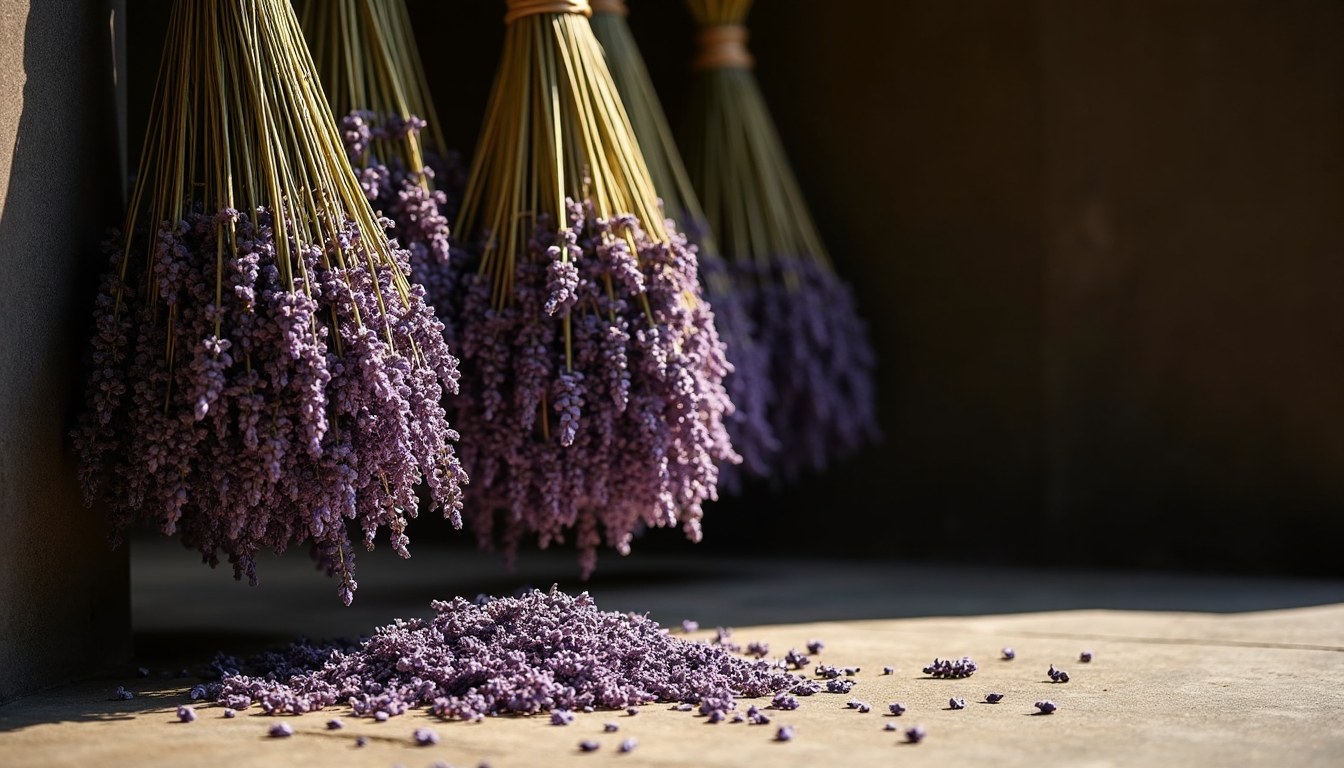
Jasmine is expensive for reasons that are entirely mechanical. The flower emits on a nocturnal rhythm: buds are essentially scentless, and mature flowers release their volatiles across a window running roughly from sunset to sunrise, peaking in the hours around midnight, an adaptation to moth pollination. After sunrise the flowers begin to close and output falls away quickly. So the harvest happens in the dark or in the hour or two before full light, by hand, blossom by blossom, with pickers working partly by touch.
Yields are brutal. Published concrete yields vary with origin and method, but season-average figures for grandiflorum cluster around 0.25 to 0.35 percent of flower weight, roughly 285 to 400 kilograms of fresh blossom for one kilogram of concrete; a seasonal study of Indian grandiflorum put the average at 0.31 percent. Somewhere between half and 60 percent of the concrete's mass then carries through into the absolute, and commonly cited figures put the requirement near 650 to 700 kilograms of flowers per kilogram of absolute. Multiply hand labor by that ratio and you get a material priced in thousands of dollars per kilogram, swinging with each season's weather. Few naturals cost more, which is why almost no commercial fragrance leans on the absolute for the bulk of its floral: it goes in as an accent, at fractions of a percent, on top of a synthetic reconstruction that supplies the volume.
Natural versus synthetic jasmine today
There is a persistent assumption that natural means good and synthetic means cheap. Both halves of it fall apart on contact with the actual materials, and jasmine is the clearest case of all, because the natural has real flaws and the synthetic has real virtues.
Jasmine absolute is a magnificent material and a difficult one. It is dark, which limits how much can go into anything pale. It is heavy and tenacious, sometimes exactly wrong for the effect you want. It varies from harvest to harvest, and on its own it can read as dense and slightly murky in air, because the fraction that gives it depth also gives it opacity. Perfumers who use it well use it as a seasoning.
A jasmine reconstruction, meanwhile, is not a fake in any meaningful sense. It is a deliberate rebuild using the same molecules the flower makes. Benzyl acetate, indole, cis-jasmone, linalool, and the jasmonates all occur in nature, and making them in a reactor rather than extracting them from a flower changes neither their structure nor their smell. What synthesis provides is control: you can set the indole at exactly the level that reads warm rather than biological, build a jasmine that stays luminous in a large room, and make it affordable enough to use at a concentration that fills a space.
The tradeoff runs in both directions. Naturals bring complexity and unpredictability. Synthetics bring precision and stability. Most jasmine you have ever smelled, in fine fragrance and in home fragrance alike, was built from both.
Sustainability sits underneath both options, and it does not resolve neatly in either direction. Jasmine cultivation is labor-intensive and supports large numbers of rural households in Egypt and southern India. It is also a supply chain that has drawn outside attention: the Egyptian harvest drew wide labor-practice scrutiny after a 2024 broadcast investigation documented children picking jasmine at night, and buyers responded with monitoring programs whose effectiveness is still argued about. Synthetic jasmonates reduce pressure on natural supply, which cuts both ways: less demand on farmland and water, but less income flowing to growing regions.
Notes that pair with jasmine
The first and most natural partner is orange blossom, jasmine's closest relative in the indolic sense: it carries the same molecule but frames it with citrus brightness and a green freshness that keeps everything airborne. Running the two together, or alternating them across a day, gives a room floral continuity without monotony. For the citrus-flower version of the same indolic story, our note on what does neroli smell like works through it in the same detail.
The second partner is musk, for structural reasons rather than aesthetic ones. Jasmine's tail is waxy and slightly abrupt; musks are extremely low-volatility materials that extend and soften whatever sits on top of them, carrying the indolic warmth forward for hours after the flower has faded. A jasmine blend with a musk base behaves completely differently at hour three than one without. Our piece on what does musk smell like explains why that category is so strange and so useful.
Beyond those two, sandalwood gives jasmine a creamy, dry floor that flatters the honeyed facet, bergamot sharpens the opening, and green tea accords chase sambac's leafy side rather than grandiflorum's fruit.
Where jasmine appears in our range
Our jasmine diffuser oil carries the note as the lead rather than as an accent, and its arc follows the timeline in the diffuser section: a fruity ester opening in the first minute or two, an indolic floral heart that assembles over roughly the following five to fifteen minutes, and a low-volatility base that holds in the room after the machine cycles off. It was formulated for cold-air atomization, so the ratio reaching the room is the ratio it was built around rather than a heat-sorted fraction of it. The room guidance above applies to it without adjustment: spaces with volume and movement suit it, and small closed rooms need short bursts and long intervals.
White florals are the category where the same blend most often reads differently from one room to the next, so the room matters as much as the note. The 5-scent sample set is chosen from the range with a five-sample minimum, which is one way to smell jasmine alongside a citrus, a wood, and a musk before deciding on a full bottle.
Frequently asked questions
Is jasmine a top note or a heart note?
Jasmine is a heart note. Its main components have moderate volatility, so it does not lead the way a citrus does and does not persist the way a musk does. In practice it takes roughly five to fifteen minutes to reach full presence in a diffused room, then holds for a considerable stretch before fading gradually rather than disappearing.
Why does jasmine sometimes smell slightly unpleasant?
Because part of it genuinely is. Jasmine contains indole, a molecule that smells fecal and faintly of mothballs at high concentration and beautifully floral in dilution. At normal room concentration you register it as warmth and depth. Push the concentration up in a small closed room and the same molecule crosses back into its unflattering range.
What is the difference between jasmine grandiflorum and jasmine sambac?
Grandiflorum is fuller, fruitier, and more honeyed, with a soft leathery dry stage, and it is the species behind most Mediterranean and Egyptian extraction. Sambac is greener and sharper, with a tea-leaf quality and a fresh apple-skin brightness from alpha-farnesene, and it is the flower used for jasmine tea and South Asian garlands.
Does jasmine smell different depending on where it is grown?
Yes, even within one species. Grasse material is generally described as greener and more transparent, Egyptian material as sweet, fruity, and tenacious with a honeyed or tea-like undertone, and Indian material as the densest of the three, with a deeper balsamic undertone. The descriptions are not unanimous between buyers, because season, field, and extraction practice shift the balance as much as the country does.
Is jasmine diffuser oil the same as jasmine essential oil?
No. Jasmine cannot be steam distilled, so a true single-plant jasmine essential oil in the usual sense does not really exist; the natural material is an absolute made by solvent extraction.
Why is real jasmine absolute so expensive?
Arithmetic. The flowers must be picked by hand, in the dark or before full sunrise, because scent output peaks overnight and collapses once the sun comes up. Season-average yields put roughly 285 to 400 kilograms of fresh blossom behind a single kilogram of concrete, and only about half to 60 percent of that concrete becomes usable absolute.
How long does jasmine take to fill a room?
Reasoning from the volatility of its components rather than from a measurement, the bright fruity top is there within the first minute or two, the recognizable floral heart assembles over roughly the next five to fifteen minutes, and the heavy fixative fraction keeps working for an hour or two after the machine stops. Room size, ventilation, and furnishing move all three bands.
How much jasmine is too much in a room?
You will know, because the note stops reading as flower and starts reading as something heavier and slightly sour. That shift is the indole crossing its concentration threshold. The fix is almost always shorter bursts and longer intervals rather than a different blend. In rooms under about 150 square feet, begin at the lowest duty cycle the machine allows and work up only if the note goes missing.
Does jasmine perform better in cold-air diffusion than in a candle?
It performs differently, and for this note the difference favors cold air. Heat drives off light molecules first and degrades the fragile jasmonates that give jasmine its dimension, so candle jasmine tends toward the sweet, simple, fruity end of the profile. Cold-air nebulization atomizes the whole blend at once in its formulated ratio, so the indolic depth survives intact.