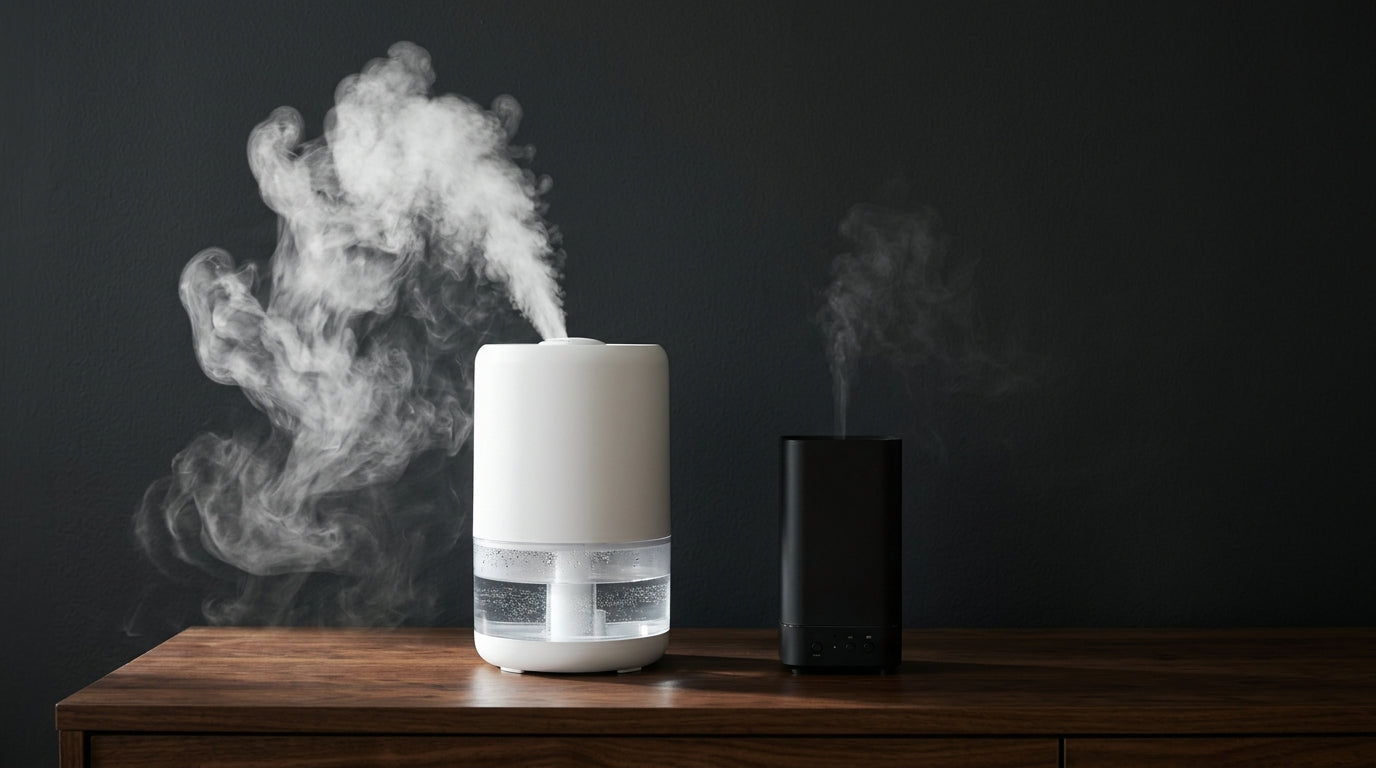






Somewhere in a hall closet right now, there's probably a humidifier that was bought to deal with dry winter air and a diffuser that was bought because the house didn't smell the way its owner wanted it to. They both plug in, they both have some kind of reservoir, and depending on the model, they can both produce a visible mist. It's easy to look at the two machines and wonder whether they're really doing different things.
They are. A humidifier is there to put moisture into the air. A diffuser is there to put fragrance into the air. Once you understand that basic difference, most of the confusion about what each machine can and can't do goes away.
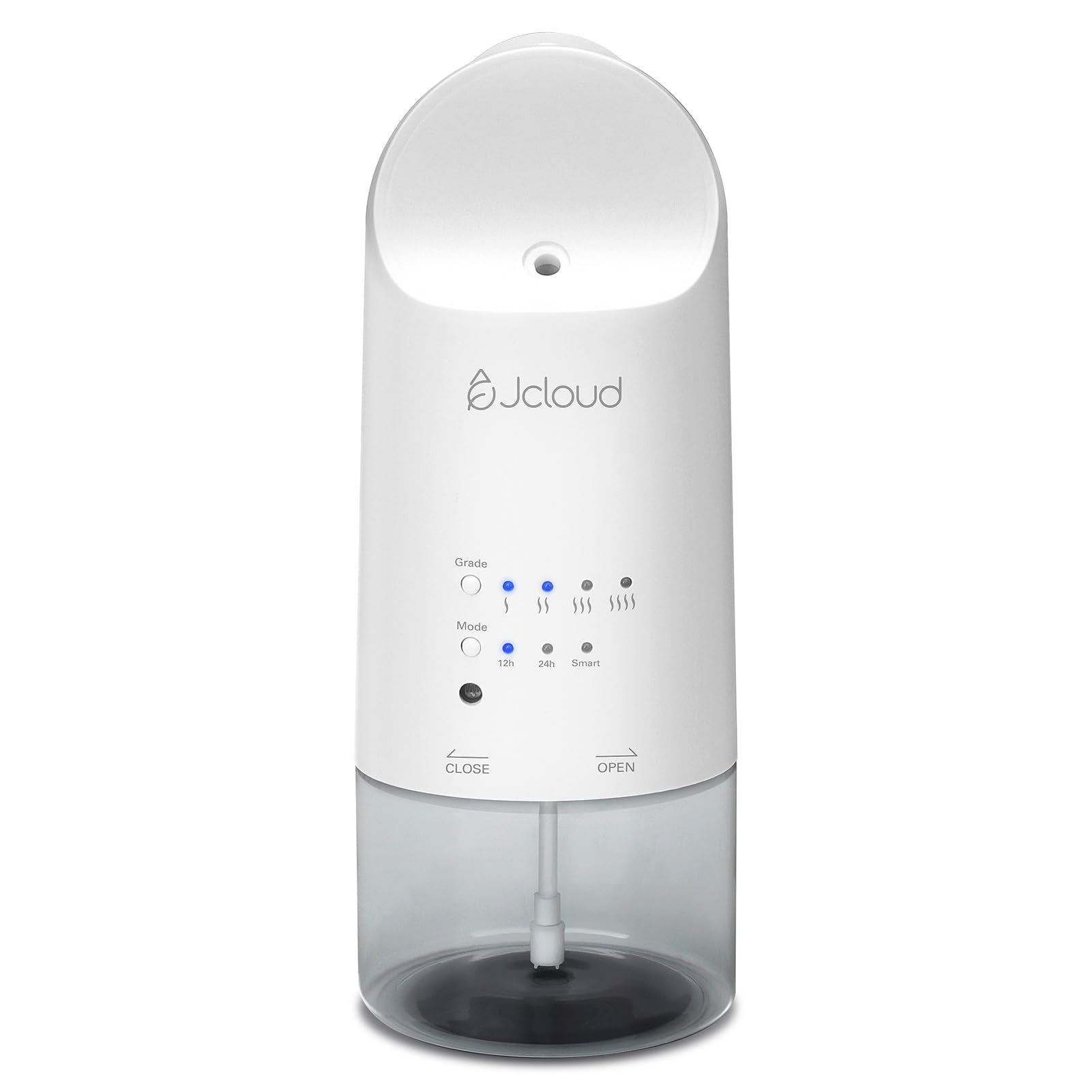
[product=jcloud-smart-plug-in-scent-air-machine]
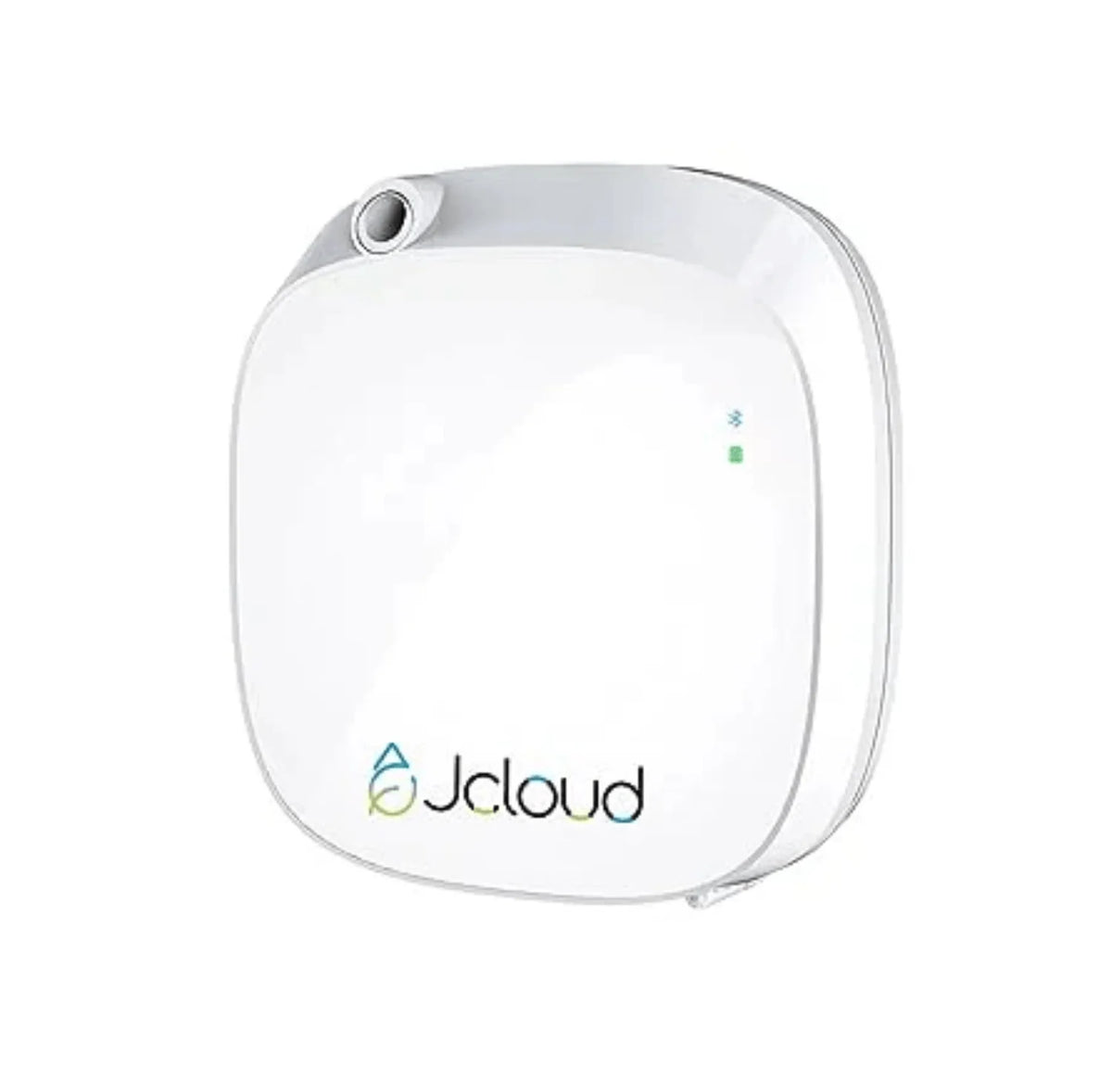
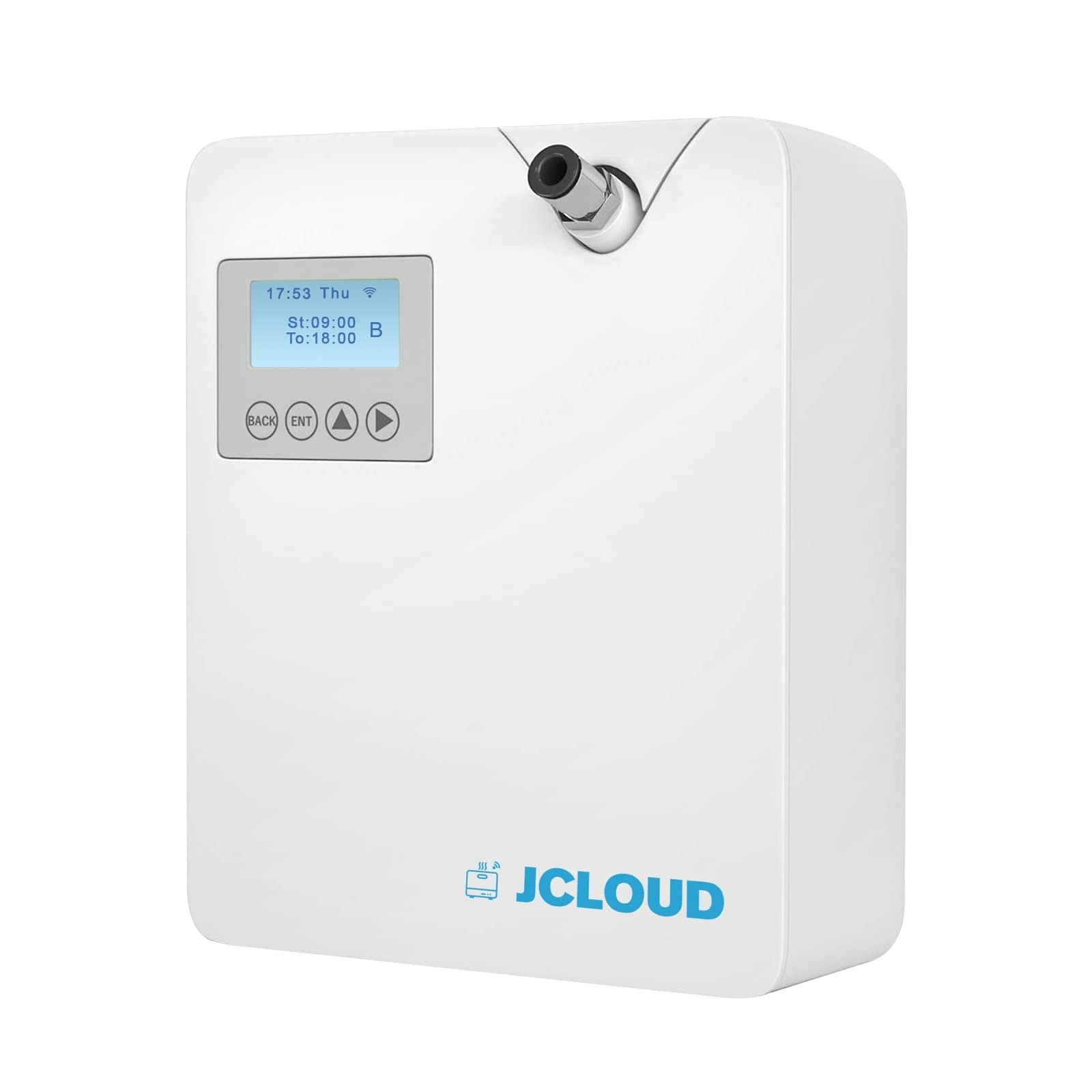
A plug-in scent air machine built specifically for fragrance. It uses no water and adds no humidity to the room.
[/product]
Why They Look So Similar
The confusion really comes down to the mist. When you see vapor coming out of a machine, it's natural to assume that whatever is happening inside must be roughly the same thing.
But look at what that mist actually represents. With a humidifier, it's water being added to the environment. With an ultrasonic diffuser, it's water carrying fragrance. With a cold air diffuser, there may not be any water involved at all. That's why judging these machines by what comes out of the top can be misleading. Two machines can look almost identical while doing completely different jobs.
What Does a Humidifier Do?
A humidifier's job is to raise the humidity in a room by adding water to the air. Depending on the type, that can happen through a cool mist, warm vapor, or an evaporative wick and fan. The goal is the same either way: more moisture in the air.
That makes a humidifier useful during the winter, particularly in homes where the heat runs constantly and the air starts feeling dry. You may notice static electricity, or simply that the house feels less comfortable than it does during more humid parts of the year. A hygrometer can tell you exactly what's happening because humidity is something you can measure, even though you can't see it.
The water tank is a big part of why humidifiers need regular attention. Water has to be emptied and replaced, mineral deposits can build up if you have hard water, and filters or wicks eventually need to be cleaned or replaced. That's just part of owning a machine designed to move water into your living space.
A humidifier isn't designed to make the room smell better, though. The water in the tank is there to become moisture, not fragrance.
What Does a Diffuser Do?
A diffuser has a completely different purpose. Instead of changing the moisture level of the room, it distributes fragrance so that you can smell it throughout the space.
The confusing part is that there isn't just one kind of diffuser. Some use water, some use oil without water, and some don't use a reservoir at all.
An ultrasonic diffuser is probably the type most people picture when they hear the word diffuser. You fill a small reservoir with water, add fragrance oil according to the manufacturer's instructions, and the machine uses high-frequency vibrations to disperse the mixture as a visible mist. Because water is involved, an ultrasonic diffuser does release some moisture, but the amount is small compared with what a real humidifier is designed to produce.
Reed diffusers work differently. There is no electricity and no water. Fragrance oil sits in a container and travels up the reeds, slowly evaporating into the surrounding air. They're simple and quiet, although their scent is generally limited to a smaller area.
Then there are cold air diffusers, which are designed specifically around fragrance rather than water. They use pressurized air to break concentrated fragrance oil into a very fine, dry mist. There is no water to evaporate and no heat being used to change the fragrance, which makes this type of diffuser particularly useful when you're trying to scent a larger area or keep a consistent fragrance running for much of the day.

Can You Put Fragrance Oil in a Humidifier?
This is where people get into trouble because it seems like it should work. If a humidifier puts something into the air and fragrance oil is something you want in the air, why not just add a little oil to the water?
Because a standard humidifier wasn't built for it.
Oil and water don't mix properly, so adding fragrance oil to the tank doesn't turn a humidifier into a diffuser. Depending on the machine, the oil can collect on the tank and internal components, affect plastic or seals, clog parts, and potentially cause damage over time. Many manufacturers specifically tell users not to add oils to the water reservoir, and doing so can also create warranty problems.
There are exceptions. Some humidifiers are specifically designed with a fragrance tray or scent pad, and if yours has one, that's different. The fragrance goes into the part intended for fragrance rather than into the water tank.
For a machine that is actually designed to disperse fragrance oil, use a diffuser made for that purpose. A purpose-built scent diffuser machine is going to handle the oil very differently from a humidifier because fragrance is its job in the first place.
Do Diffusers Humidify the Air?
An ultrasonic diffuser technically adds some moisture because it is dispersing water, but that doesn't make it a substitute for a humidifier.
Think about the difference in scale. A small ultrasonic diffuser may have a reservoir holding a few hundred milliliters of water and run for several hours. A humidifier is designed specifically to move much larger quantities of water into the air over the course of a day. The two machines may both produce visible mist, but that doesn't mean they're having anything close to the same effect on room humidity.
In a small enclosed space, you might see a slight change from an ultrasonic diffuser. In a typical bedroom, living room, or open area, it isn't going to solve a genuinely dry-air problem.
Cold air diffusers and reed diffusers don't humidify at all. There is no water being put into the air, so if you're trying to raise the humidity in your house, fragrance isn't going to accomplish that regardless of how large or powerful the diffuser is.
Why Waterless Diffusers Are Different
Once you understand the difference between humidifying and scenting, the appeal of a waterless diffuser makes more sense.
A water-based diffuser has to deal with the water because the water is part of how it disperses the fragrance. That means a reservoir that needs to be emptied and cleaned, water that can leave mineral residue, and fragrance that is being dispersed as part of a diluted mixture.
A waterless machine skips that entire process, using fragrance oil directly rather than mixing it into a tank of water. Larger units can also be connected to HVAC systems, allowing fragrance to travel through the home's existing air circulation rather than relying on one small machine sitting in one room.
That doesn't make water-based diffusers bad. An ultrasonic diffuser can be perfectly useful when you want to fragrance a bedroom, office, or other relatively small space and don't mind cleaning the reservoir. Waterless diffusion simply makes more sense when the priority is fragrance coverage rather than adding moisture.
And if you're trying to solve both problems, there's nothing wrong with having both machines. A humidifier can handle the dry winter air while a separate diffuser handles the smell of the house.
What About Humidifier and Diffuser Combination Units?
Combination machines sound appealing because they promise to solve two problems with one appliance. Some do a perfectly reasonable job for someone who wants a little fragrance and a little humidity in a small room, but they're still making compromises because the two functions require different things from the machine.
The humidifying side needs enough water capacity to make a meaningful difference to the room. The fragrance side needs to distribute scent effectively without unnecessarily diluting it or creating a maintenance problem. A small combination unit isn't going to compete with a full-size humidifier for moisture output, and it isn't necessarily going to give you the fragrance coverage of a purpose-built scent diffuser either.
For a nursery, bedroom, or office where space is limited and expectations are modest, a combination unit may be perfectly adequate. If you're trying to humidify a large house and keep a noticeable fragrance throughout it, separating the two jobs usually makes more sense.
Which One Do You Actually Need?
Start with the problem rather than the machine.
If the house feels dry during the winter, you're dealing with static electricity, or a humidity reading shows that the air is too dry, you're looking for a humidifier. Adding fragrance won't solve any of those things.
If the problem is that the house smells stale, you want a particular fragrance throughout a room, or you simply want your home to have a recognizable scent when someone walks through the door, you're looking for a diffuser. From there, the type of diffuser depends on how much space you're trying to cover and how much maintenance you're willing to deal with.
A reed diffuser is simple and works well for a relatively small area. An ultrasonic diffuser gives you more control and is useful when you don't mind dealing with a water reservoir. A cold air diffuser is better suited to larger spaces and consistent fragrance coverage, particularly when you want to scent several rooms or connect the system to HVAC.
The fragrance matters just as much as the machine, too. A diffuser can only distribute what's inside it, so if you're trying to create a particular atmosphere in your home, choosing the right diffuser oil is a big part of the result.
Letting Each Machine Do Its Job
A humidifier is for moisture. A diffuser is for fragrance. Neither one is a compromised version of the other, and neither one is going to quietly start doing the other's work if you buy a bigger model.
If you need both, you don't necessarily need a machine that tries to combine them. In many homes, the simplest solution is just to let each machine do the job it was designed to do.