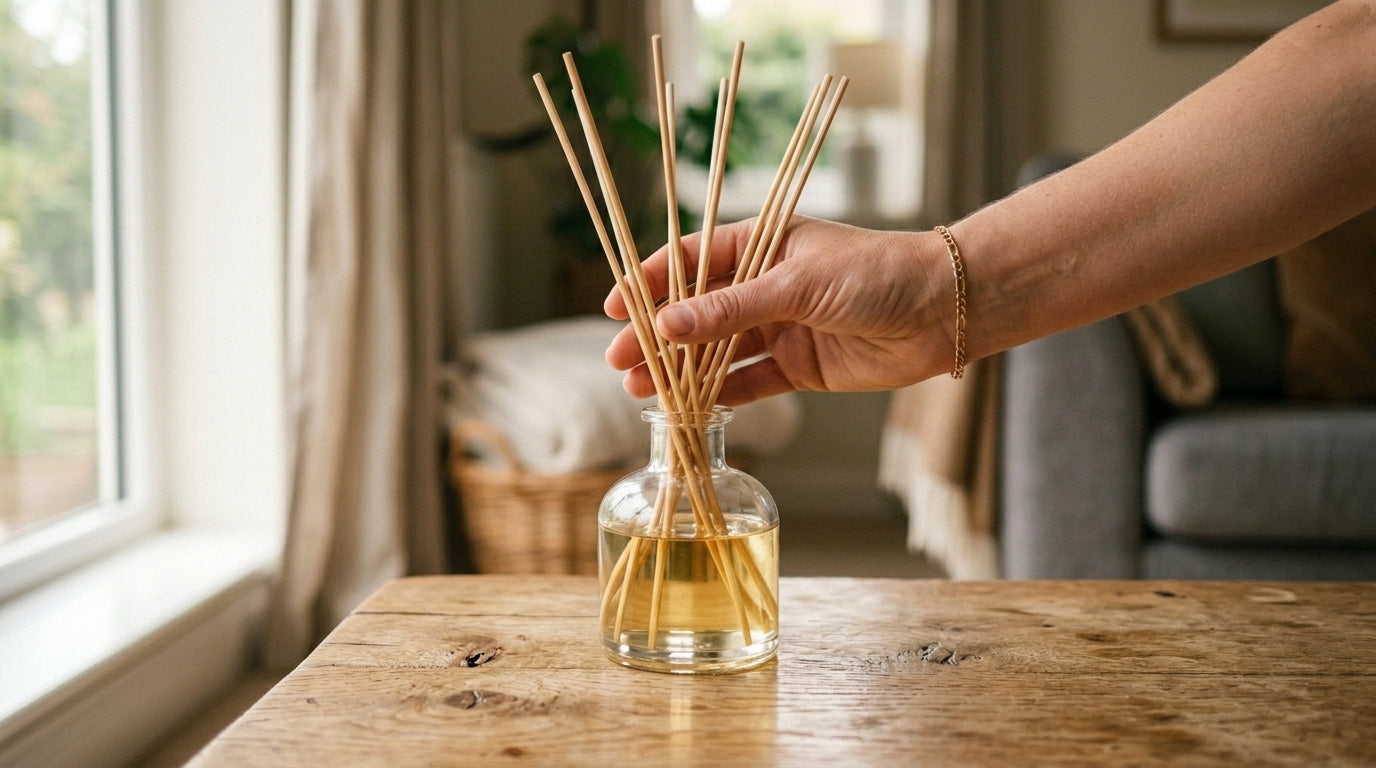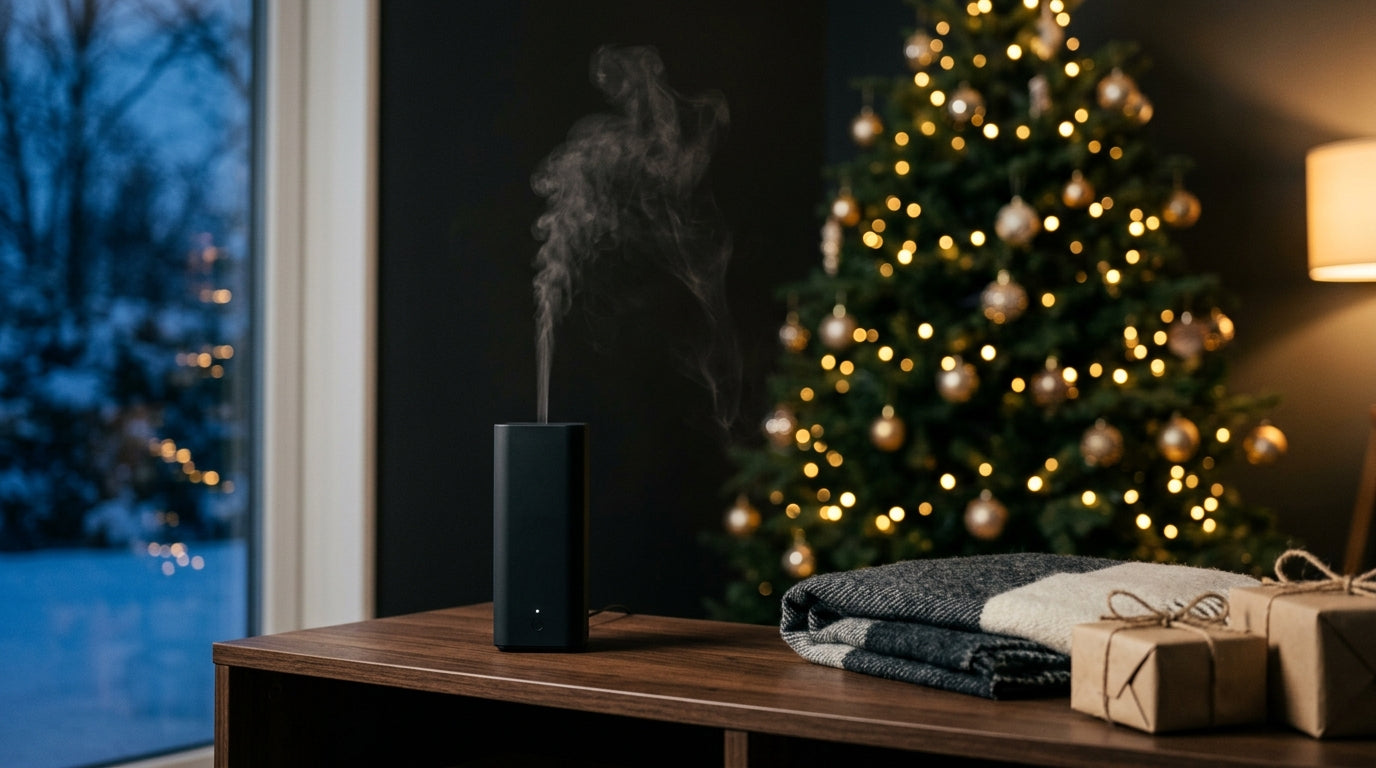







Amber is the scent people reach for when they want a room to feel warm. Not warm like cinnamon or a bakery, but warm like late afternoon light: sweet, smooth, a little powdery, with a resinous depth that hangs in the air long after you notice it. It shows up everywhere in home fragrance, from to room sprays, yet ask ten people what amber actually is and most will guess wrong. It is not the gemstone. It is not even a single ingredient. That mix-up is worth clearing up, because knowing what amber really is makes it much easier to pick one you will love.
What Does Amber Smell Like?
Honeyed is the word that comes up most. Amber smells sweet, but slowly sweet, the way honey is sweet compared to sugar. Underneath that sits something resinous and slightly spicy, and over the top a soft, powdery finish that keeps the whole thing from feeling sticky. Citrus sparkles. Florals bloom. Amber just radiates.
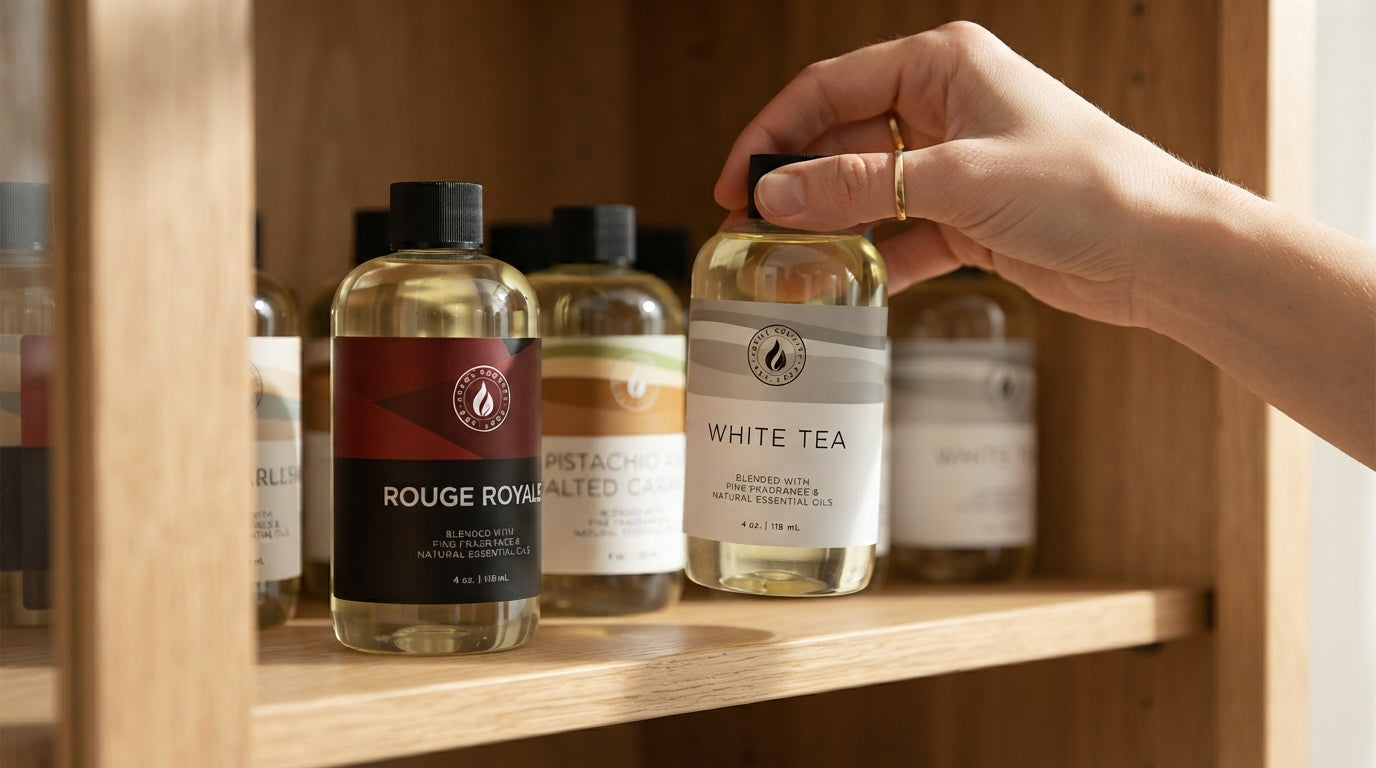
[product=rouge-royale-baccarat-540-diffuser-oil]
Premium home fragrance oil featuring luminous amber accords layered with florals and woods, delivering warmth, richness, and lasting sophistication.
[/product]
It also behaves differently than lighter notes. Amber does not hit you when you walk in the door. It builds, settles into fabric and corners, and holds a room for hours. That slow burn is exactly why so many spaces that smell expensive have amber somewhere in the mix. Nothing about it tries hard, and that is the trick.
What Amber Actually Is
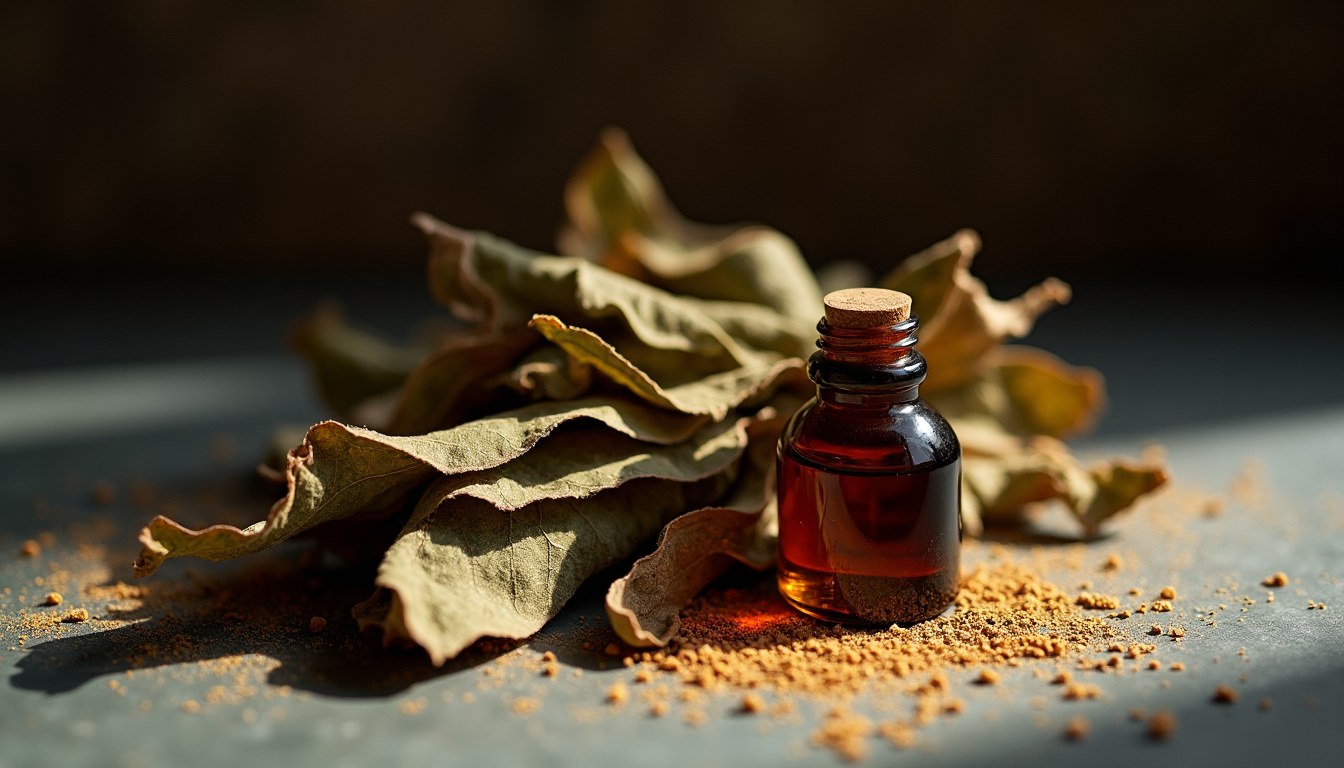
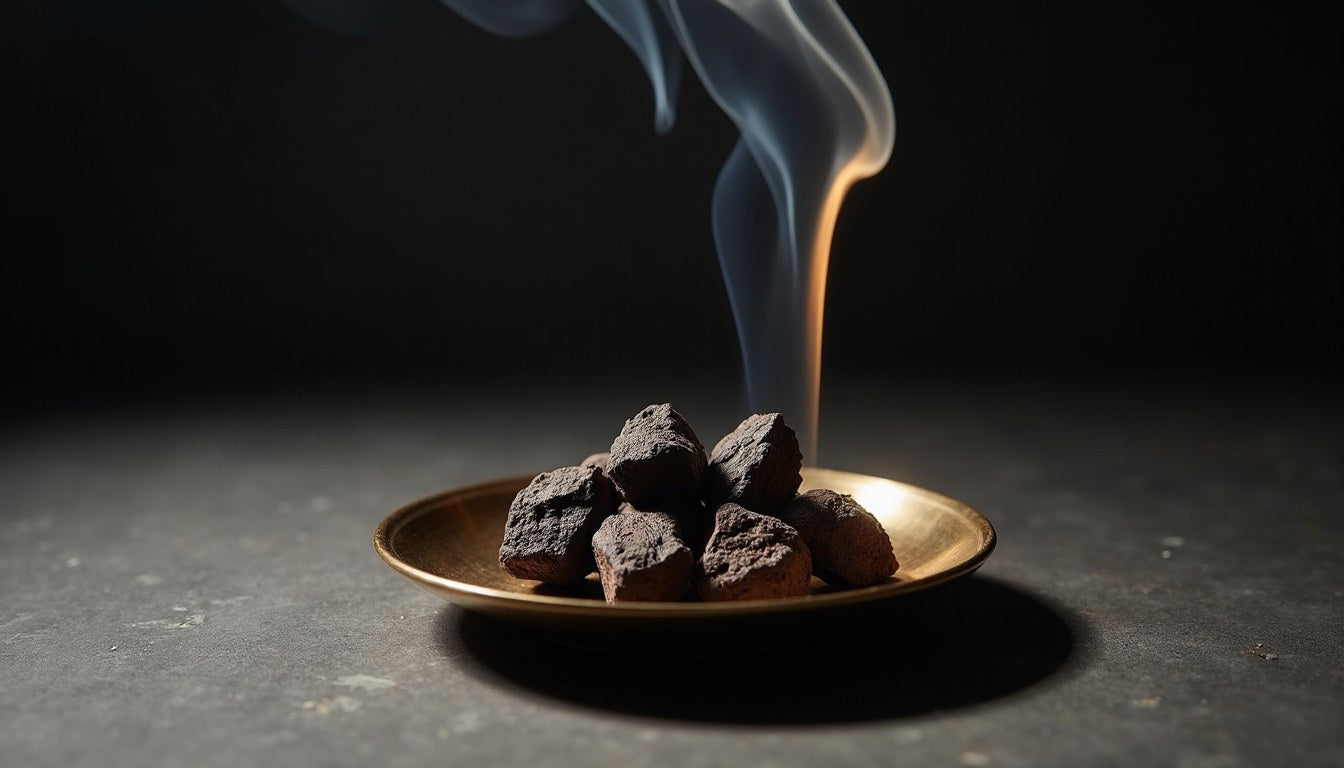
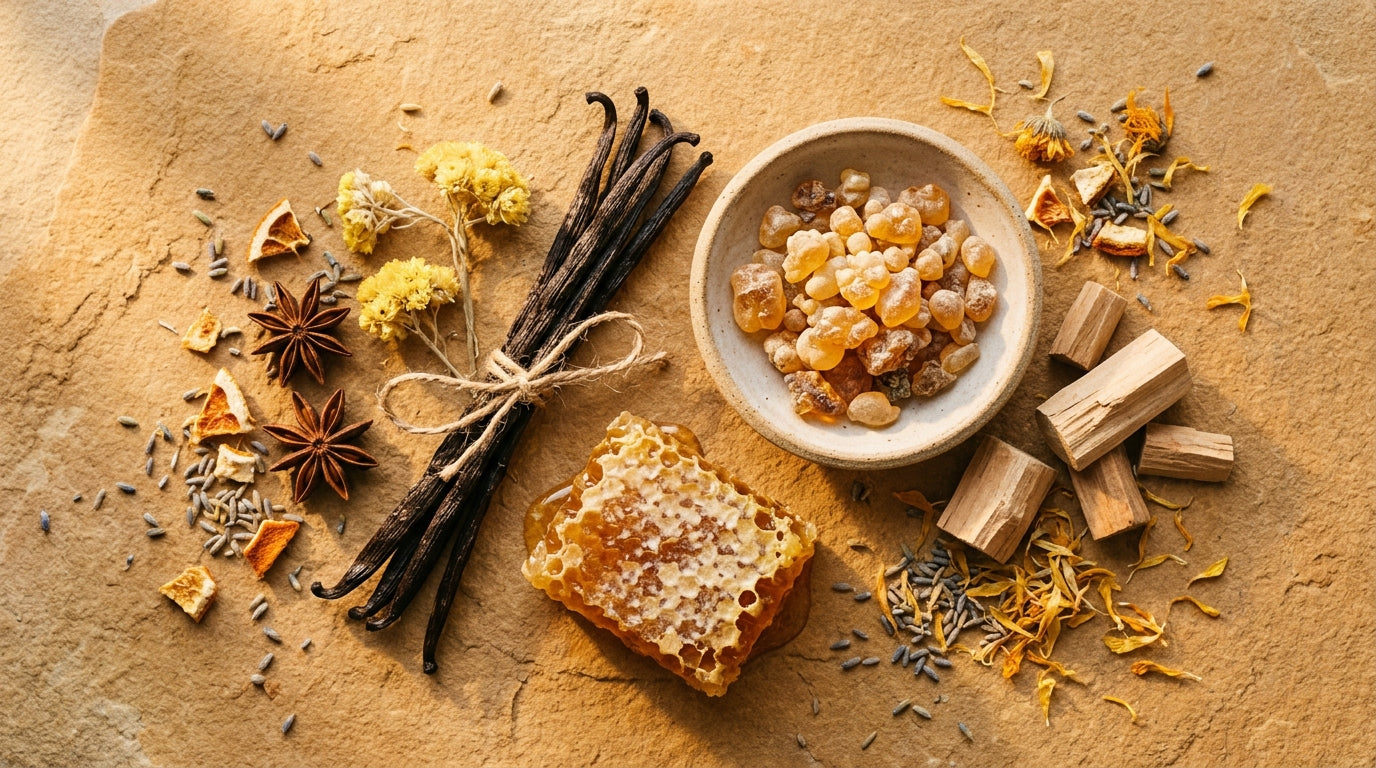
The fossilized amber in jewelry has almost no smell at all. What fragrance makers call amber is a recipe: warm resins blended with soft, vanilla-leaning notes until they add up to that golden, honeyed character. The name came from the color and the feeling, not the stone. So when a label says amber, it is describing a mood the blend was built to create, and different makers build it differently. Some go sweeter, some go drier, some spike it with saffron or spice.
Knowing that changes how you shop for it, and how you use it. Amber is made of deep, slow-moving notes, so it naturally works as a base. Run it under something brighter and it does the quiet work of anchoring the room while the lighter scent takes the credit.
Amber and Vanilla
Vanilla is amber's closest relative, and the two blur together constantly. Vanilla brings the cream, amber brings the resin, and blended they stop reading as two notes at all. They just read as warmth. There is a reason the combination is the most searched version of this note: each one sands down the other's rough edges, and the result feels finished in a way neither manages alone.
Lean that sweetness a little further and amber goes gourmand, plush and dessert-adjacent. That is the direction a lot of warm blends drift once the weather cools, and amber wears it well.

Woody Amber
Pull amber the other way, toward sandalwood and cedar, and the sugar falls off. What is left is drier, more reserved, closer to a library than a bakery. Woody amber is the version that ends up in living rooms and studies, and it shares more DNA with than with anything sweet. Same grounded, slow-fading character, but with that unmistakable amber glow still burning underneath.
Where Amber Works Best
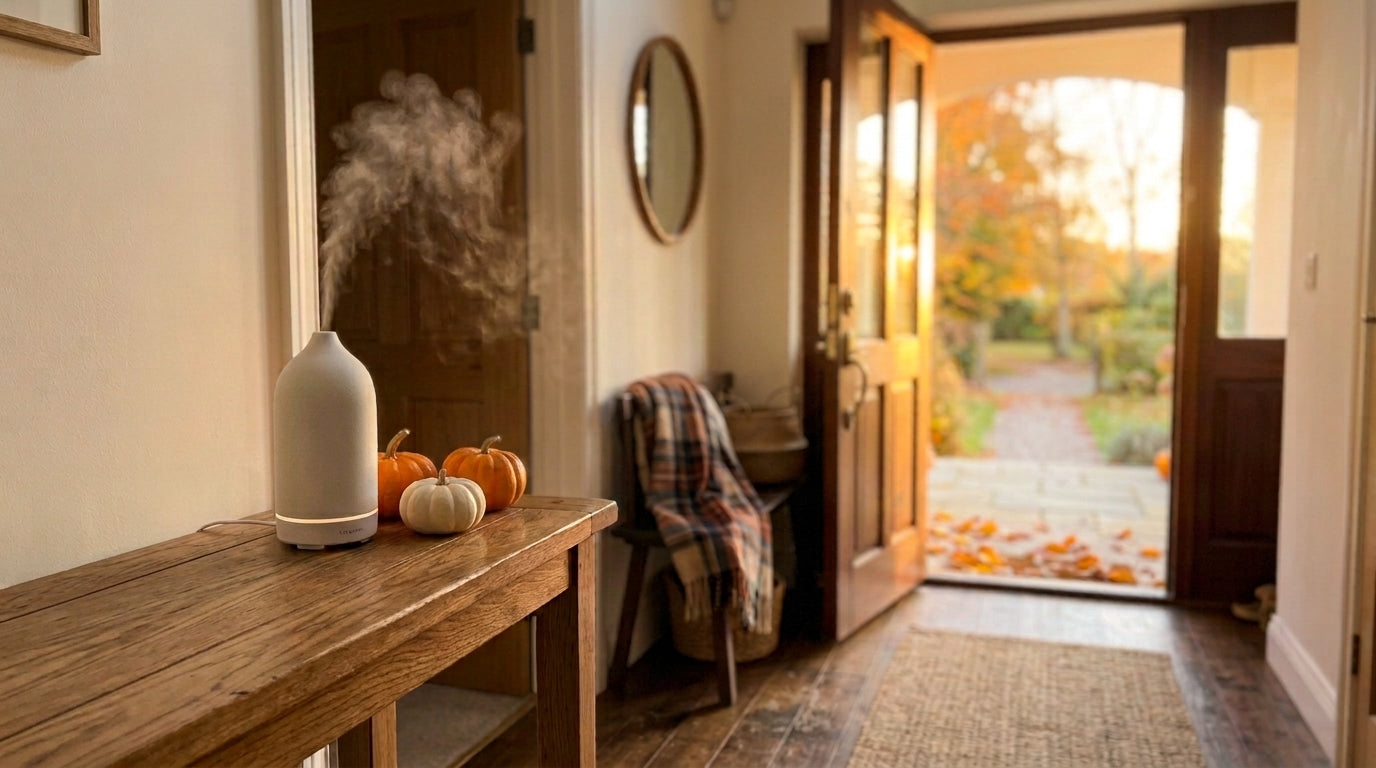
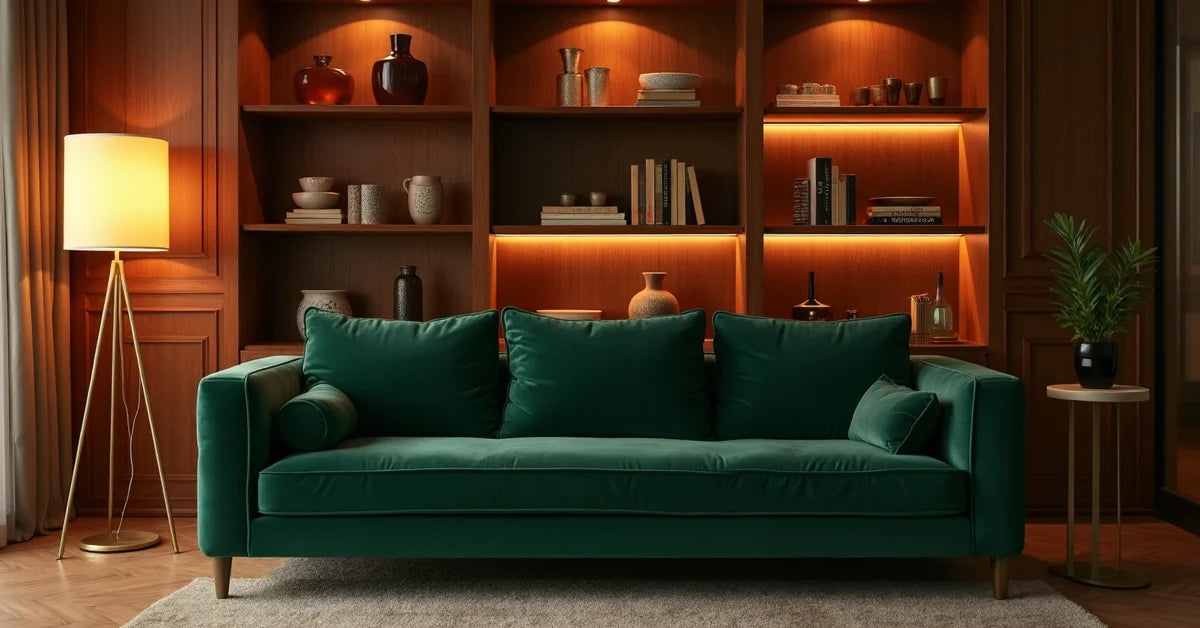
Wherever evenings happen. Living rooms, dens, bedrooms, the corner where the good chair is. Amber's slow, persistent presence suits rooms where you settle in, and it holds steady for hours instead of flashing and fading. It is also the most seasonal note in the warm family. Plenty of people run citrus and green scents all summer, then swap in amber the first week the light gets low, and honestly, that instinct is correct. Amber in October does something amber in July never will.
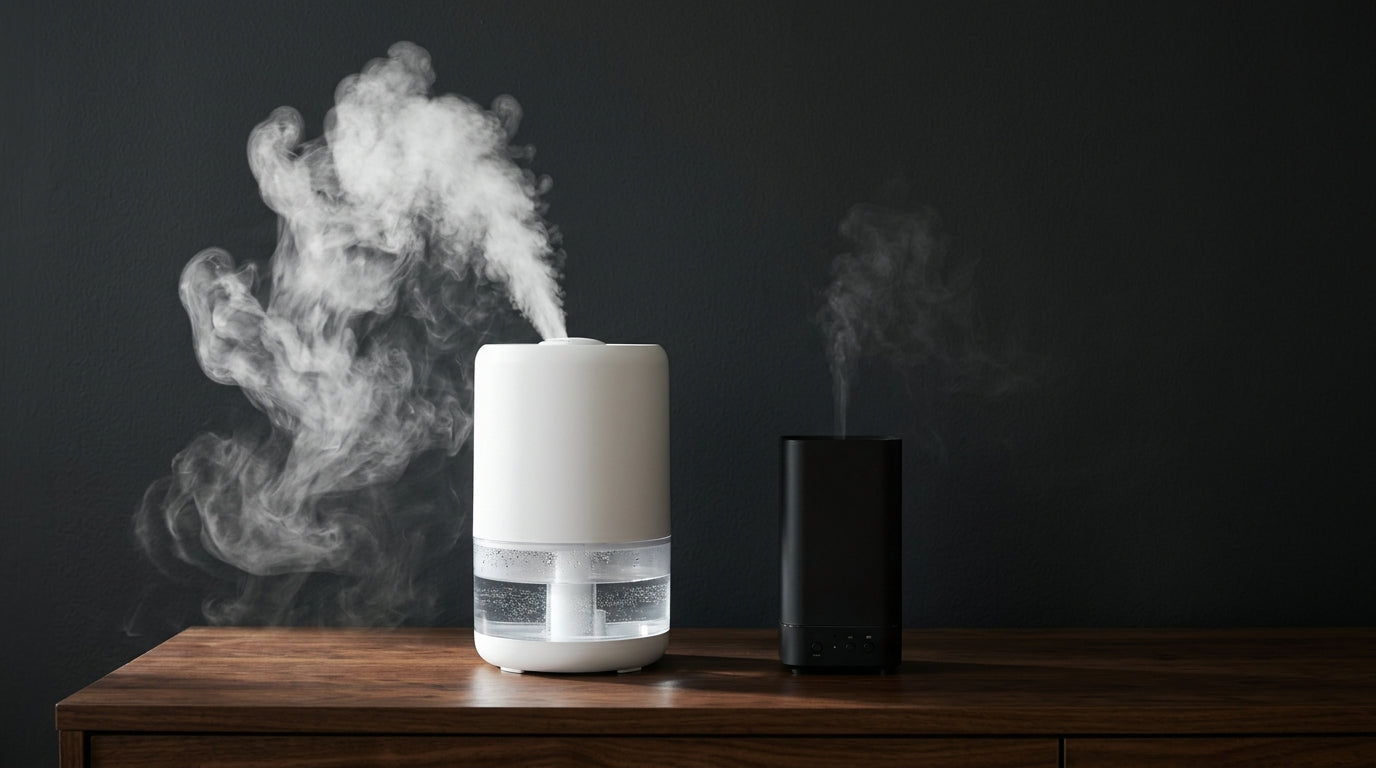
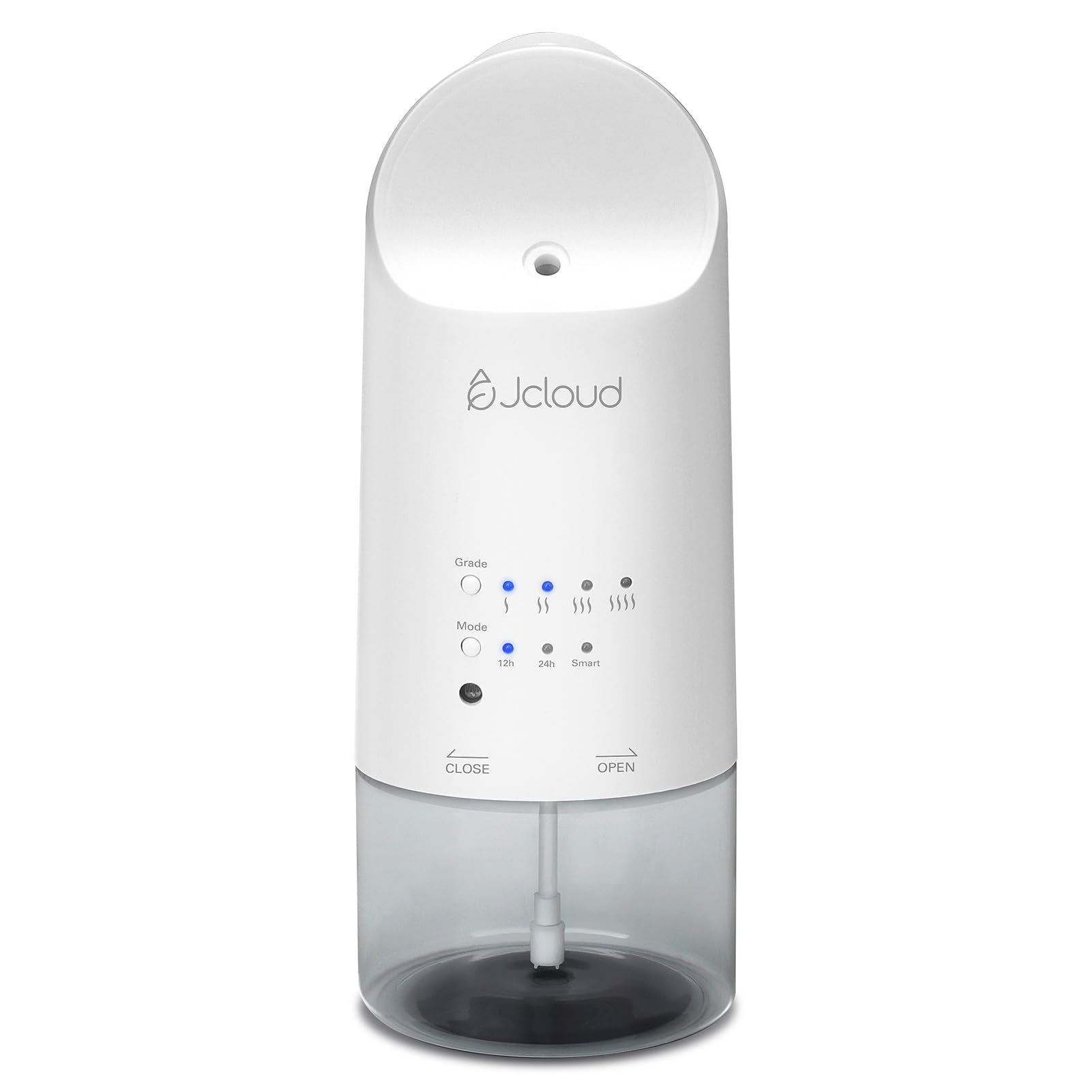
One practical note: it does not need volume. Amber is rich enough that a moderate diffuser setting carries it. Crank it and the room starts to feel like a scented pillow fort.
Finding an Amber That Fits
Amber almost never travels alone. It arrives leaning sweet toward vanilla, dry toward woods, or rich toward spice, so the real question is which side of its personality you want in the room. Blends built on vanilla and notes stay present in a room far longer than bright ones, which is most of what people are after with this note anyway: a scent that moves in, settles down, and stays.
Loud fragrances announce themselves. Amber never bothers. It just makes a home smell settled, inviting, and quietly expensive, and it has been doing it that way longer than almost any note on the shelf.