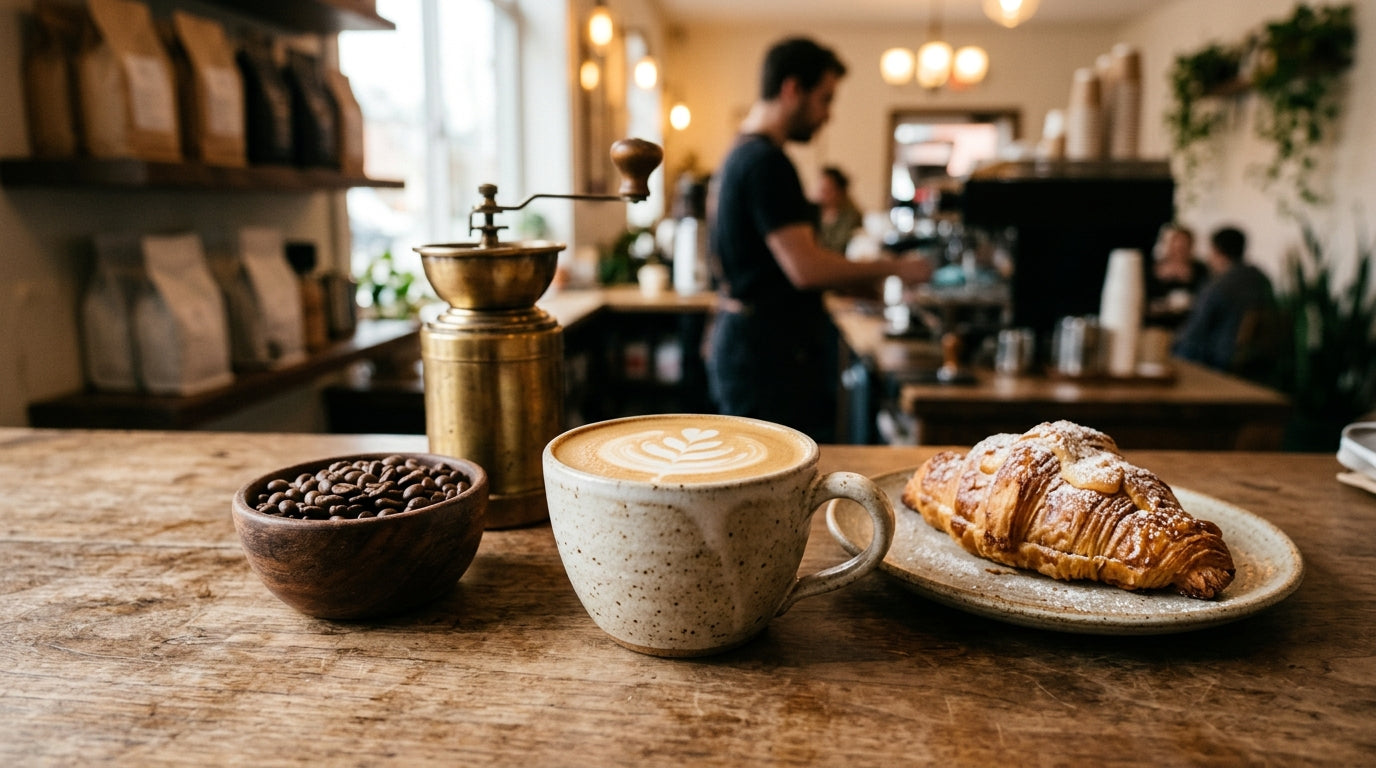








Almost everybody likes walking into a coffee shop, and a big part of that has nothing to do with ordering anything. The smell does most of the greeting. Roasted coffee, steamed milk, and something faintly sweet all hang in the air together, and the whole room feels warmer for it. Plenty of people would happily have their house smell like that all the time, and it's more doable than most of them think. The coffee shop smell is really just a recipe, and with the right you can run it at home without brewing a single cup.
[product=caffe-latte]
Fresh brewed coffee softened with steamed milk and a touch of creamy vanilla, the combination that reads as a coffee shop rather than a cup of black coffee. This is the smell that greets you at the counter, made to hold a room all day.
[/product]
What Does Coffee Smell Like?
Most people can recognize coffee the second they smell it, but describing it is harder than you'd think. Get specific and you find roasted, nutty, and a little chocolatey, with caramel-like sweetness and a faint smoky edge underneath. Fresh grounds smell sharper and greener, while a brewing pot smells rounder and sweeter, which is why the same bag of beans can fill a kitchen two different ways.
Why Does Coffee Smell So Good?
Roasting creates hundreds of aroma compounds, which is a big part of why the smell is so complex and why it can seem even better than the cup tastes. Your nose picks up many of those compounds before you ever take a sip.
That works out nicely for home fragrance. The smell really is the best part of coffee, and it happens to be the part you can keep without the pot going stale on the burner.
What Makes a Coffee Shop Smell Like a Coffee Shop?
Here's the thing about a cafe, though. It doesn't smell like plain coffee. What you're smelling in a good one is usually a mix of coffee, steamed milk, sweetness from whatever is being served, and sometimes the warm smell of wood, pastries, or food coming from behind the counter.
The milk is the piece people miss. Straight black coffee smells roasty and sharp, a latte smells creamy and comforting, and the room smells like the latte. That soft, milky sweetness over the roast is why coffee works so well with other warm notes like vanilla and caramel.

That distinction matters when you go looking for a coffee fragrance for your home. If you want a cafe scent rather than a pot of black coffee, look for blends that bring creaminess and sweetness into the roast instead of relying on coffee alone.
Why Brewing More Coffee Doesn't Work
The honest first answer to making a house smell like coffee is to make coffee, and if you drink a pot a day your kitchen already gets there for an hour or so each morning. The problem is that the smell leaves as fast as the brew cools, and nobody wants to run a coffee maker all day for the air alone.
A morning pot gives you a morning kitchen. It can't give you a coffee shop.
How to Keep the Cafe Scent Going
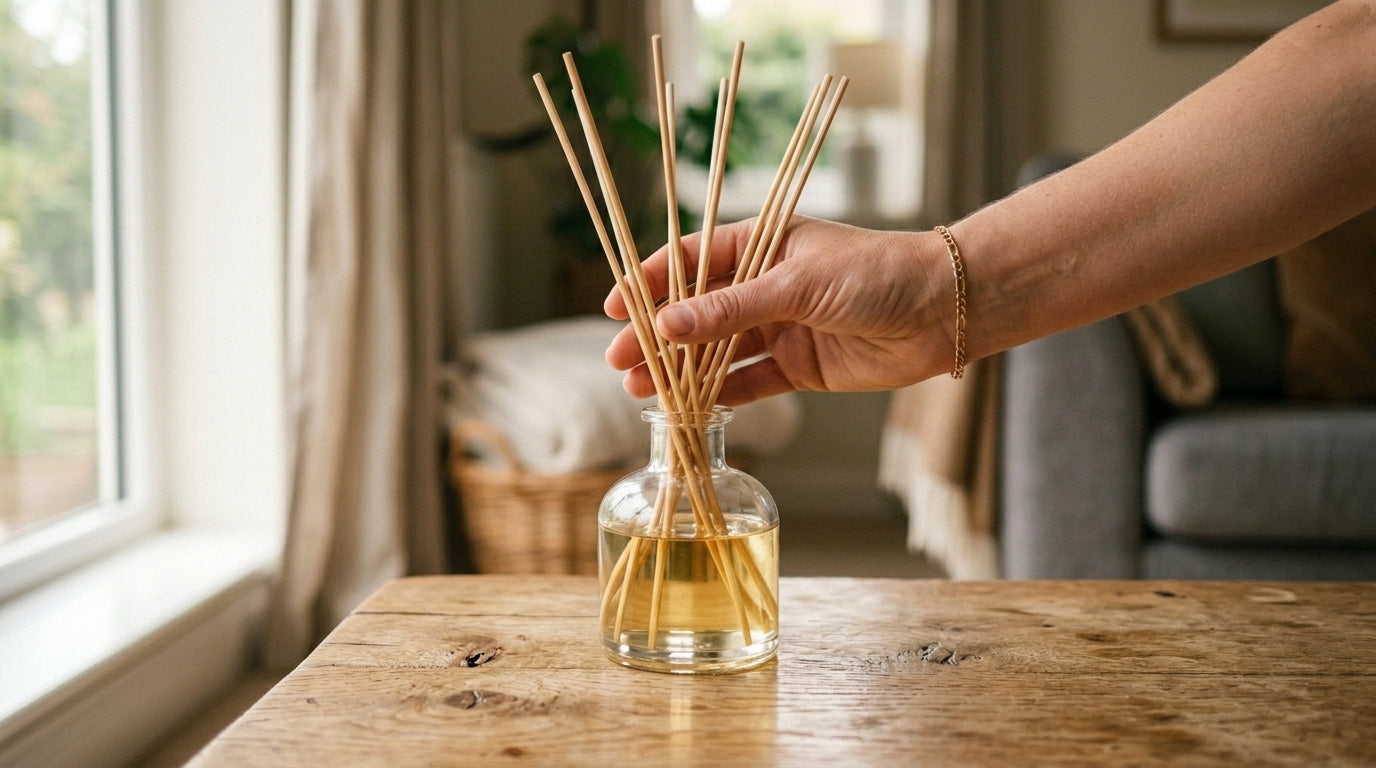
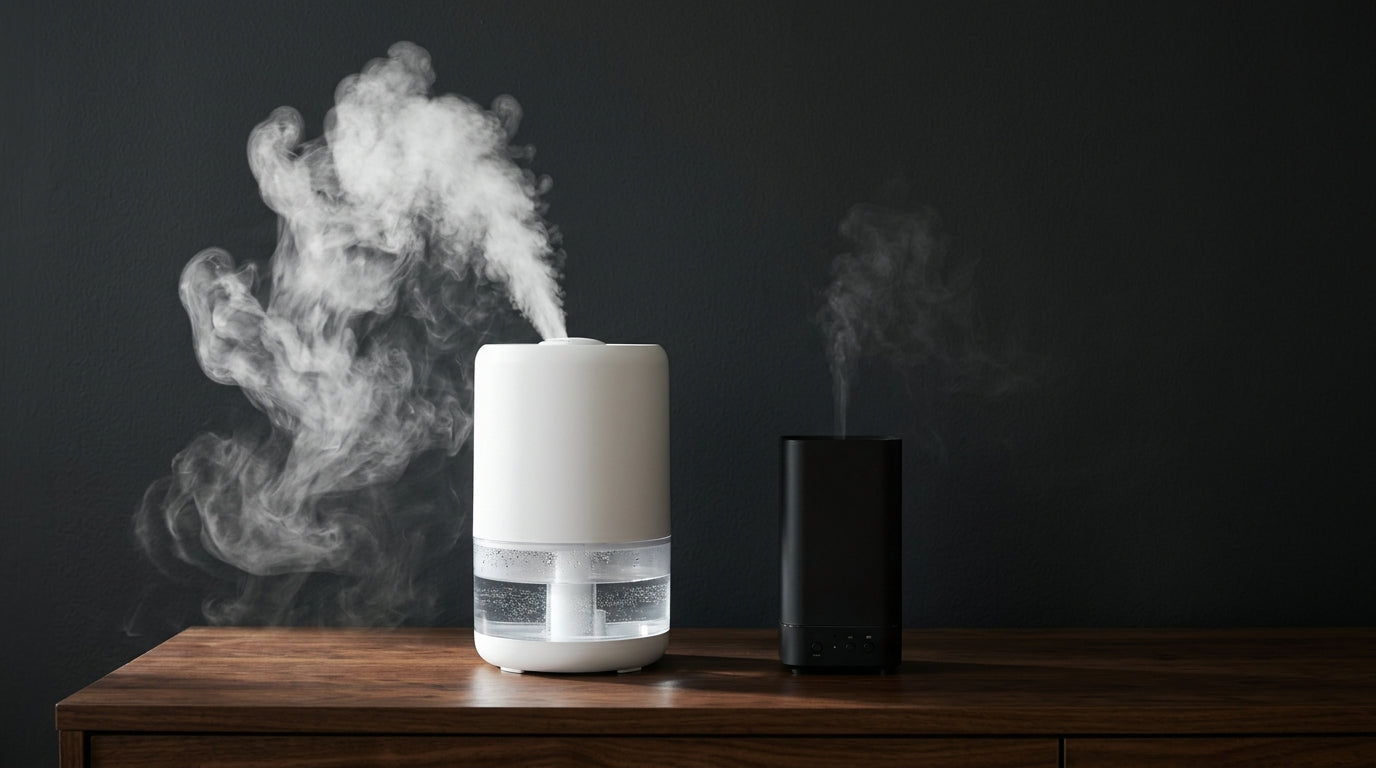
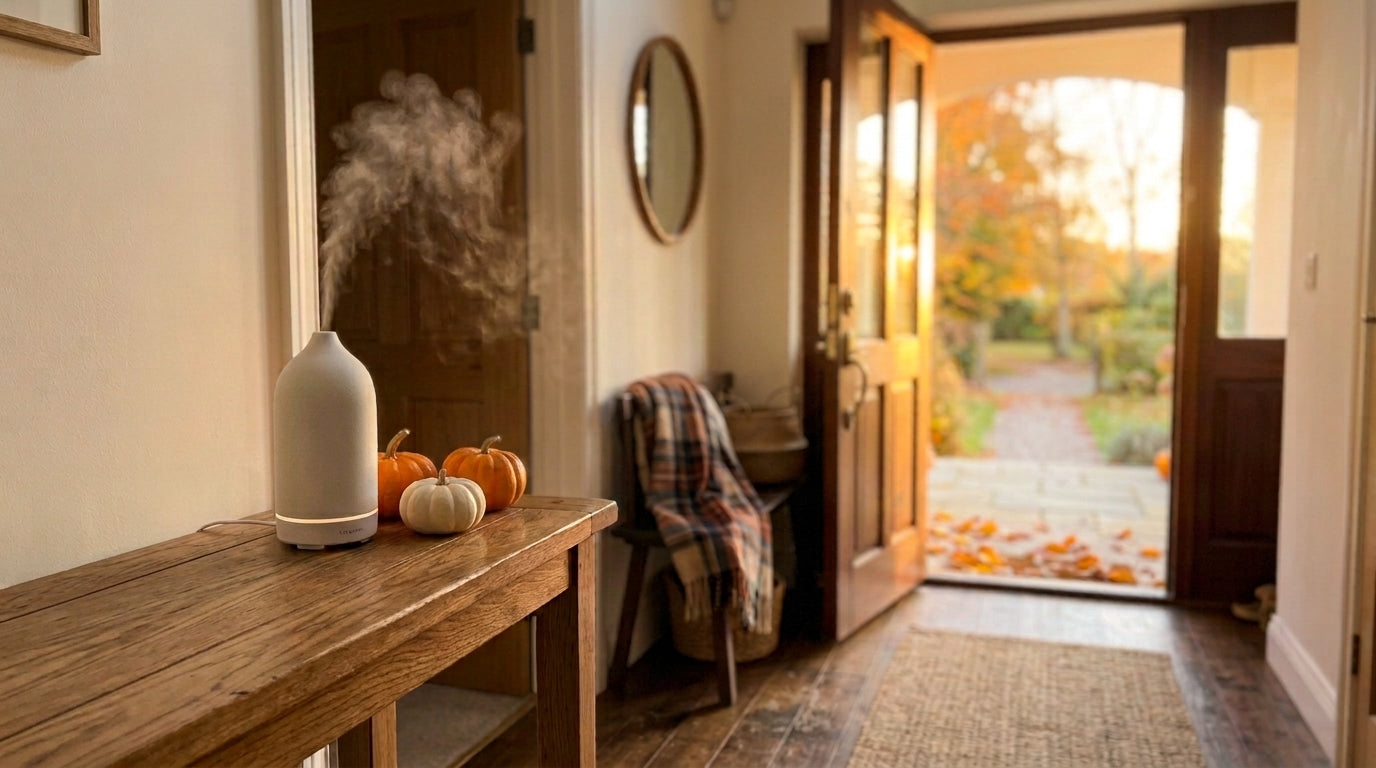
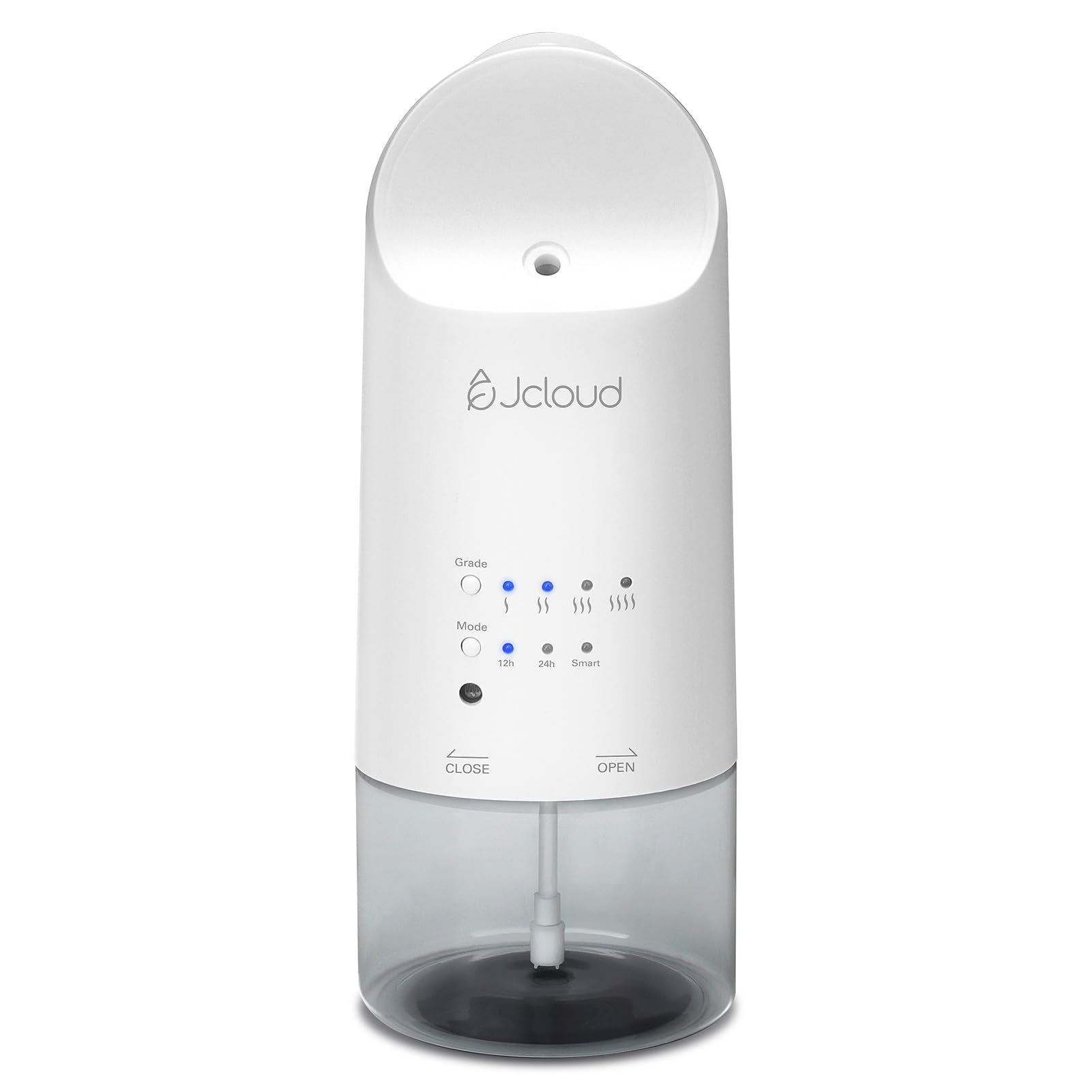
This is what a diffuser is for. A coffee fragrance oil runs steadily for as long as you want it to, at whatever strength suits the room, so the smell that used to disappear with the pot just stays.
The kitchen and the main living space are the natural rooms for it, and a lower setting beats a strong one. A coffee shop smells inviting rather than overpowering, and the same approach works at home. Start your low and let the scent build, instead of trying to make the whole room smell like coffee the second you walk in.
Pairing Coffee With Other Warm Scents
Coffee is unusually easy to build around. A makes it sweeter and rounder, closer to the pastry case than the espresso machine. Caramel pushes it further toward dessert without losing the roast underneath. Woodier notes pull it in a darker direction, better suited to evenings than mornings.
You can keep coffee running through the morning and switch to one of the deeper warm scents in the evening if you want the house to change with the day.
When Coffee Works Best
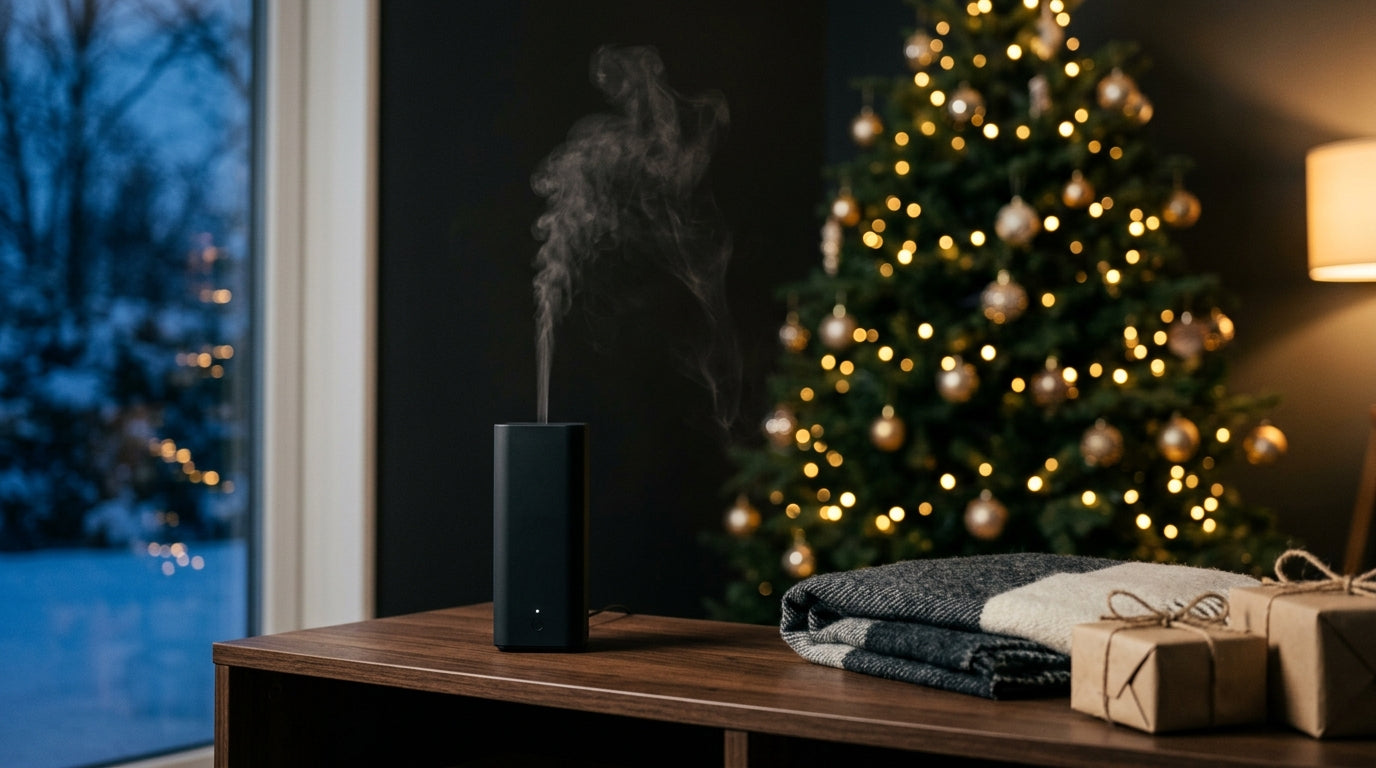
Coffee is one of those scents with a natural time of day, and most people run it the way they drink it. Mornings are the obvious fit, and it earns its keep through fall and winter, when a warm roasted smell makes the whole house feel more alive on a gray afternoon.
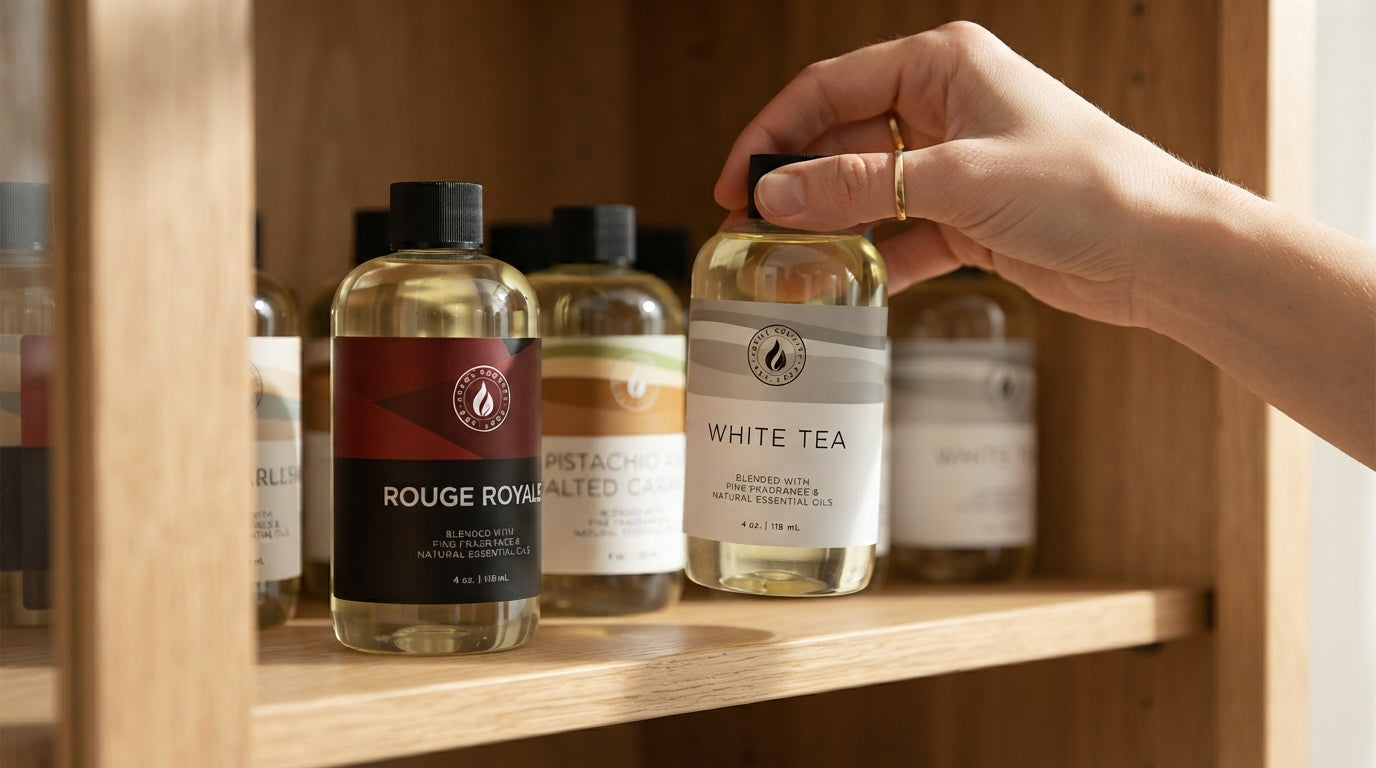
Summer is where it struggles. It competes with open windows and lighter air, and it can feel heavy against them. Treat it the way cafes treat a seasonal menu: run it from roughly September through spring, then hand the house over to citrus and lighter blends when the weather turns. If you're building a rotation around it, a short list of the is an easier place to start than browsing everything at once.
The Smell Was Always the Best Part
There's a reason the smell gets you before you even reach the counter. Coffee makes a space feel warm, familiar, and lived in before you've taken the first sip, and for a lot of people the aroma was always more appealing than the drink itself.
You don't need an espresso machine running all day to get that feeling. You just need the right version of the smell, and something that will keep it in the air long after the pot would have gone cold.